REVIEW · SIENA
Siena Medieval Power Quest: Self-Guided Family Feud Game
Book on Viator →Operated by Questo · Bookable on Viator
A phone game that teaches Siena fast. This self-guided Medieval Power Quest turns the streets into a puzzle walk, with clues you can use offline on your own schedule.
I like that it keeps you moving from landmark to landmark without the pressure of following a guide, and you can stop and restart whenever you need a breather. One thing to watch: the whole experience depends on the app working on your device, and a few users ran into login or loading issues, which can turn a fun hour into frustration.
In This Review
- Key things to know before you start
- How the Questa quest really works across medieval Siena
- Starting in Piazza del Duomo: your first feud clue
- Duomo di Siena clues: when the puzzle points to the floor
- Santa Maria della Scala: a guided pause in plain sight
- Palazzo Chigi-Saracini: turning palace scenery into a game path
- Piazza del Campo: the big square becomes your scoreboard
- Fonte Gaia: a change of pace, plus another clue
- Palazzo Tolomei and the end near Banca Monte dei Paschi
- Who this self-guided game is best for in Siena
- Is it worth $7.20 for a 1 to 1.5 hour quest?
- Should you book the Siena Medieval Power Quest?
- FAQ
- How long does the Siena Medieval Power Quest take?
- Do I need internet to play?
- What language is the quest offered in?
- Where do I start and where does the quest end?
- Is a tour guide included?
- What if the quest doesn’t show up in the app?
- How do I get help if I get stuck?
- Can I cancel for a refund?
Key things to know before you start

- Offline play means you can keep going even if your phone reception gets sketchy.
- 9 puzzle challenges spread across major Siena sights, so it feels like a guided route without a guide.
- Pause and resume helps when the heat hits or kids need a snack stop.
- 24-hour customer support is there if a clue or the app trips you up.
- English availability is stated, but some people found the story and wording imperfect.
How the Questa quest really works across medieval Siena

This is a self-guided, app-based family feud style game set in medieval Siena. Your only “start up” is getting access to the quest through a mobile access code, then opening it on your phone using the right login. Once the story begins, you solve puzzle challenges that unlock directions to the next stop. The route is built around Siena’s big-name landmarks, but the pacing is yours.
The practical magic is that you can play at walking speed. The experience is designed for a 1 hour to 1 hour 30 minutes loop on average, which makes it a smart option when you want a structured walk but you still want to linger where you like. And if you need to step aside for shade, a restroom, or a quick gelato reset, the app lets you pause and resume.
You’ll also want to keep expectations tuned for a “game.” It’s not a detailed commentary tour. The point is to get you noticing. That shows up best in the way clues can nudge you toward details—like wordplay on the Duomo floor area—rather than just handing you a history lecture.
Finally, it’s offered in English, and the device experience matters more than the scenery does. If your phone struggles with the app, you’ll feel it fast. For the best odds, test the app connection before you step away from the start point.
Other underground and medieval Siena tours we've reviewed in Siena

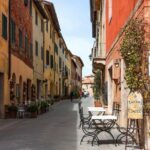
Starting in Piazza del Duomo: your first feud clue
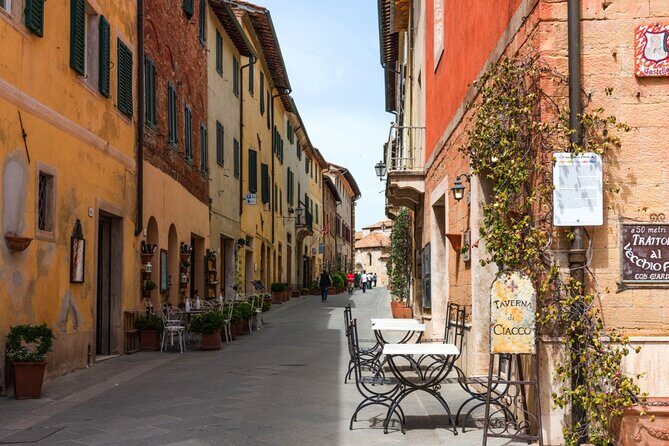
Your adventure begins at Piazza del Duomo (53100 Siena). You’ll receive the first clue here, and it kicks off the story’s challenge. The game’s design is simple: solve one step, then the next part appears, along with directions to the next landmark.
What I like about this start is that Piazza del Duomo is already a strong “arrival point.” Even before you’re deep in the puzzle, you get that classic Siena feel—open space, the big Duomo presence, and a natural place to gather the group and get your phones ready. It also works well with families because you’re not stuck immediately in a tight maze of streets. You can figure out the app without feeling like you’re blocking foot traffic.
If you’re traveling with kids or teens, this first clue is often the moment where everyone decides whether the game is fun or annoying. In a few experiences, handing the phone to teenagers turned the whole walk into a team mission. That’s a good strategy if your group has mixed ages.
One tip: before you move on, make sure everyone understands what you’re waiting for—finish solving the current puzzle before you assume the app has moved you on. With a game like this, timing matters more than speed.
Duomo di Siena clues: when the puzzle points to the floor
After Piazza del Duomo, the quest calls you to Duomo di Siena for the next challenge. This is where the experience can become more than just “walk to the next photo spot.” One reported highlight was a hands-on-feeling moment: deciphering words on the Duomo floor area as part of the game.
That’s the best kind of puzzle travel. You’re not just reading a sign. You’re looking closer, because the clue requires it. And it’s a nice break from the usual tourist routine. Even if you’ve seen lots of churches, solving a clue here gives you a reason to slow down.
The downside is that this is also the most sensitive part of the experience. If your app isn’t loading properly or your phone’s brightness is too low outdoors, you can lose time. Also, puzzle steps can be tricky. In positive experiences, hints fixed that. In not-so-positive experiences, the app’s usability and English phrasing caused extra confusion. So go in with patience, and don’t be afraid to ask the support team if you get stuck.
If you’re traveling in hot months, this Duomo phase can be a relief because it breaks up the walking. Still, plan for lingering. The game encourages you to stop and solve, and you don’t get a strict “move on now” countdown vibe.
Santa Maria della Scala: a guided pause in plain sight

Next up is Santa Maria della Scala. At this stop, you’ll get another clue that advances the story and keeps the route moving. The game gives you permission to be slow here. You can stop as long as you like, then continue when you’re ready.
This is a good place to reset your pace, especially with families. Once the Duomo puzzles finish, you might still want to explore the area around Santa Maria della Scala for real-world sightseeing too. The quest doesn’t stop you from doing that—it just uses the clue mechanic to keep you from wandering aimlessly.
What this stop does well is break the walk into chunks. Instead of one long grind from point to point, the game creates natural checkpoints. That matters in Siena, where streets can feel like a continuous climb or curve. The quest helps you feel like you’re progressing even if you’re stopping often.
If you want more context while you play, the game itself can feel lighter on narrative detail than a guided tour would. Some people wanted more historical explanation after solving the puzzles. So if you’re the type who likes facts, you might enjoy pairing the quest with a little casual reading on your own after each clue, or by asking questions at any site where staff are available.
Palazzo Chigi-Saracini: turning palace scenery into a game path
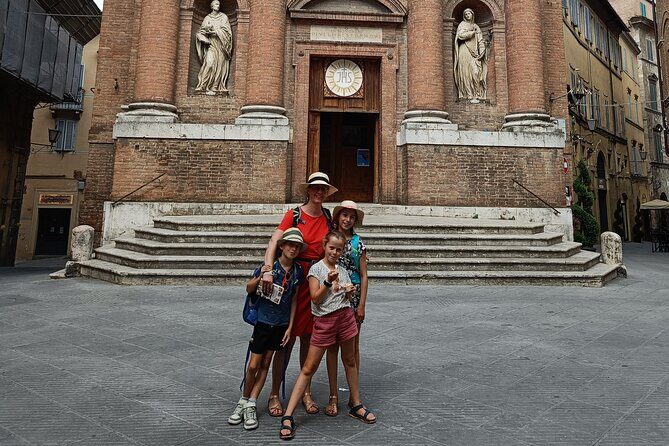
At Palazzo Chigi-Saracini, you’ll receive another clue. This one keeps the story rolling and gives you directions to the next stop. The palace setting helps, because Siena’s architecture does a lot of work for you visually. Even when you’re focused on a puzzle, the surroundings keep the walk interesting.
This is also a spot where the game’s navigation style matters. The quest is meant to guide you from landmark to landmark without a guide physically traveling with you. That can be a big value for families or mixed-age groups. You don’t have to keep everyone together in a single pace line, and you don’t need to fight for hearing and attention over street noise.
Still, you’ll be relying on your own phone for directions and clue text. So I recommend you keep the brightness up, and if you’re using a power-hungry phone setting, think about switching to a more battery-friendly display mode before you start.
If you want an easy win: assign one person in your group to be the “navigator” for the next clue while everyone else enjoys looking around. It turns the puzzle route into something collaborative instead of a solo chore.
Other guided tours in Siena





Piazza del Campo: the big square becomes your scoreboard
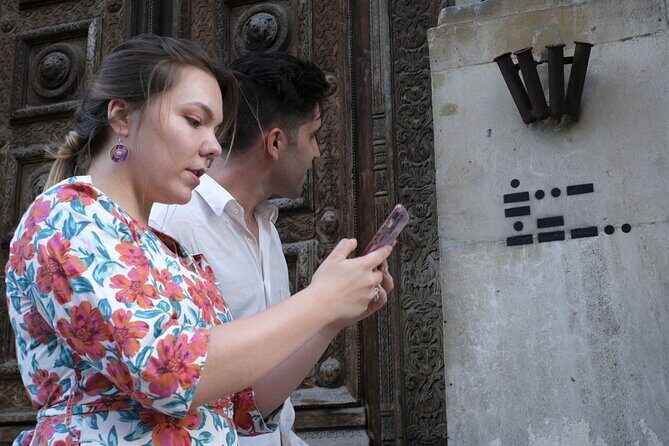
Then comes Piazza del Campo, one of Siena’s signature public spaces. You’ll get another clue here, and this is where the route feels most like a proper game board: open space, lots of visual cues, and a strong sense of being in the heart of things.
I like this moment because it changes the texture of the walk. Early stages are about reading and solving. Piazza del Campo adds spectacle. Even without solving anything instantly, the setting helps you feel oriented in the city. The game’s design also encourages you to stop and take it in rather than simply passing through for a photo.
The route includes Fountain Gaia a bit later, but Piazza del Campo is often the place where kids and teens start to enjoy the walk again if they’ve been slowing down from heat or fatigue. The key is that the game gives them a mission. One positive experience described how solving and hinting kept the group moving when the kids were losing energy.
If you’re traveling with multiple kids at different ages, you’ll probably have the best luck giving the phone to whoever enjoys puzzles, then rotating roles after a couple of clues. It reduces frustration and helps the younger kids feel like they’re part of it too.
Fonte Gaia: a change of pace, plus another clue
At Fonte Gaia, the quest provides another clue and continues the story toward the final stretch. This stop is useful for a practical reason: a fountain area can be a natural pause without feeling like you’re taking a random break. It’s also a good spot to drink water, cool down, and get everyone back into the game mode.
What I like here is that the clue gives you something to focus on besides just standing around. One reported experience also mentioned wordplay on the Duomo, and that same idea carries through here: you see the city as part of the game rather than just as a backdrop.
This is also a good moment to watch how the app’s hint system helps you. Some puzzles can be tricky, and hints do the heavy lifting when you’re stuck. If your group tends to get stuck and argue, decide early: if no one solves it within a few minutes, use hints and keep the walk moving.
If the English translation feels off to you, don’t panic. The clue may rely more on observation than language perfection. Keep your eye on what the clue is pointing toward, and use any hint text like a flashlight, not a script.
Palazzo Tolomei and the end near Banca Monte dei Paschi
The quest continues to Palazzo Tolomei, where you’ll receive yet another clue. After that, the story and city exploration game end at Banca Monte dei Paschi di Siena. Your listed endpoint for the activity is also around the Palazzo Tolomei area, so in practice you can think of the finish as being in the same general central zone.
I like how the finish is handled. You’re not sent off to some distant parking lot. It ends where you can still enjoy Siena afterward—either by continuing to explore on foot or by grabbing a final coffee and calling it a day.
This final stretch is where you’ll feel whether the game worked for your group. If the app has been stable, the puzzles feel like a guided loop and the walk ends with that satisfied, mission-accomplished feeling. If the app has been buggy or text-heavy and confusing, the finish can feel like just another thing you have to troubleshoot before you can relax.
So if you’re going to troubleshoot, try to do it earlier rather than later. Get your login sorted at the start, keep the app updated if needed, and make sure you’re using the same email account you used for booking. A support note provided to one user pointed out that logging in with the wrong email can prevent the quest from appearing.
Who this self-guided game is best for in Siena
This is especially a win for families with kids or teens who get bored with long walks. The game structure gives them a reason to keep going. One family shared that it flipped the mood on a hot day when kids were ready for shade and boredom took over. The ages mentioned—15, 12, 10, and 8—suggest it can work across a wide range, as long as someone in the group enjoys solving.
It’s also good for travelers who don’t want a guide’s schedule. Since this is a private activity for your group, you’re not dealing with a big tour line or trying to hear facts over other groups. You can stop for as long as you like at each clue step, which makes it more flexible than many scripted tours.
That said, if your group strongly prefers traditional history interpretation, this might feel too game-forward. The puzzles lead you past major sights, but the depth of explanation isn’t a substitute for a full guided tour. Some feedback also pointed out that English storytelling and translation can be rough. If that matters to you, approach it as a puzzle walk first, and add your own context at the sights themselves.
Is it worth $7.20 for a 1 to 1.5 hour quest?
At $7.20 per person, you’re paying for structure and motivation more than for a guide. For the time—around 1 hour to 1 hour 30 minutes—that’s a very workable cost if you want your sightseeing to feel like an activity rather than a checklist.
You also get a few value boosters:
- Group discounts are offered, so it can drop in cost per person when you travel with others.
- Offline play reduces friction. You’re not forced into constant data or spotty signal fixes.
- 9 puzzle-based challenges mean the route has built-in variety, not just walking between landmarks.
The big “value question” is your device and patience. If the app loads smoothly, this feels like a smart, low-cost way to visit Siena’s highlights without hiring a guide. If the app fails, you can lose sightseeing time fast—one unhappy experience described spending over 30 minutes trying to get the quest to show.
My practical take: if you’ll travel with a group that likes games, this price is easy to justify. If you’re traveling with people who hate troubleshooting apps or solving puzzles, you might be happier with a guided tour where the interpretation is handled for you.
Should you book the Siena Medieval Power Quest?
I’d book it if you want a lighthearted, structured walk through Siena’s main sights and you’re bringing at least one person who enjoys puzzles. It’s also a strong option for families because the pause/resume flexibility helps you manage heat, energy, and attention spans.
Skip it—or at least be ready with a backup plan—if you know your phone struggles with apps, your group dislikes game mechanics, or you’re hoping for lots of historical narration in English. The quest is built around challenges, clues, and directions, and a few users reported bugs or awkward translation.
If you do book, here’s what I’d do to stack the odds in your favor: set aside a few minutes before leaving the start area to confirm the app loads and the quest appears, and double-check you’re logging in using the email tied to your booking. Once it’s running, this walk can turn Siena into something you actively participate in, not just passively observe.
FAQ
How long does the Siena Medieval Power Quest take?
It’s listed as approximately 1 hour to 1 hour 30 minutes.
Do I need internet to play?
You can play the quest offline.
What language is the quest offered in?
It’s offered in English.
Where do I start and where does the quest end?
You start at Piazza del Duomo, 53100 Siena. The activity end is listed around Palazzo Tolomei, Piazza Tolomei, 12, 53100 Siena, and the game route ends at Banca Monte dei Paschi di Siena.
Is a tour guide included?
No. This is self-guided, and a tour guide is not included.
What if the quest doesn’t show up in the app?
One support note indicated that after downloading the app, you may need to create an account using the same email you used for booking. If the quest still does not appear, contact support.
How do I get help if I get stuck?
The quest includes 24-hour customer support. Help can be reached through the chat function in the app/website, or by emailing [email protected].
Can I cancel for a refund?
You can cancel for a full refund if you cancel at least 24 hours in advance of the experience start time. If you cancel within 24 hours, the amount paid is not refunded.