REVIEW · SIENA
Siena: Walking Tour and Skip-the-Line Duomo Tickets
Book on GetYourGuide →Operated by Tuscan Escapes by Papilio · Bookable on GetYourGuide
Medieval Siena works best when you get a guide who can connect the dots fast. This 2-hour walking tour hits the city’s top sights and then lets you step inside the Duomo without wasting time in line. I like the mix of big-art stops and everyday local tradition: you’ll hear the background behind the Contrade and the Palio tradition, not just point-and-shoot facts. One possible drawback: with only two hours, the pace is brisk, and you’ll want to plan a bit of solo time afterward if you fall in love with a single chapel or street.
I also really like the structure. You start at Piazza San Domenico under the large tree in front of the church, walk through key landmarks in the historic core, and finish at the cathedral area with skip-the-line tickets so you can focus on what you came for. In past departures, the guide quality has been a standout, with names like Giorgia, Elio, Claudia, and Ambra showing up in highly rated experiences for their energy and clear explanations.
You’ll get an authorized English-speaking local guide and a fast-track ticket that matters in Siena. The city’s streets are narrow and slow-going when you’re on your own, so a guided route is a practical way to get your bearings fast. Just note the dress rules: covered shoulders and knee-length bottoms are required for church entry, and the tour isn’t suitable for people with mobility impairments.
In This Review
- Key things that make this Siena tour worth it
- Starting at Piazza San Domenico: a smart way to orient yourself
- Basilica di San Domenico: more than a stop on the map
- Piazza del Campo and the Palio: understanding the city’s heartbeat
- Palazzo Salimbeni and Siena’s old wealth: where banking meets politics
- Palazzo Tolomei and the main square scenes
- The Duomo of Siena: skip the line, then savor the chapels
- Group size, headset, and how to get the best sound
- Price and value: is $47 fair for two hours in Siena?
- Who this Siena tour is best for
- Quick practical checklist before you go
- Should you book the Siena Walking Tour and Skip-the-Line Duomo Tickets?
- FAQ
- Where does the tour start?
- How long is the tour?
- What’s included in the price?
- Is hotel pick-up included?
- What should I wear for church entry?
- Are pets allowed?
- Is it suitable for mobility impairments?
Key things that make this Siena tour worth it
- Skip-the-line Duomo access so you spend time looking, not waiting
- Basilica di San Domenico and St Catherine context that makes Siena’s religious identity click
- Contrade and Palio background so Piazza del Campo feels more than scenic
- UNESCO-listed medieval city center route focused on the main architectural hits
- Guides with strong local storytelling names like Elio, Claudia, Giorgia, and Ambra appear often in top-rated tours
- A tight, doable 2 hours—great for first-day orientation
Starting at Piazza San Domenico: a smart way to orient yourself
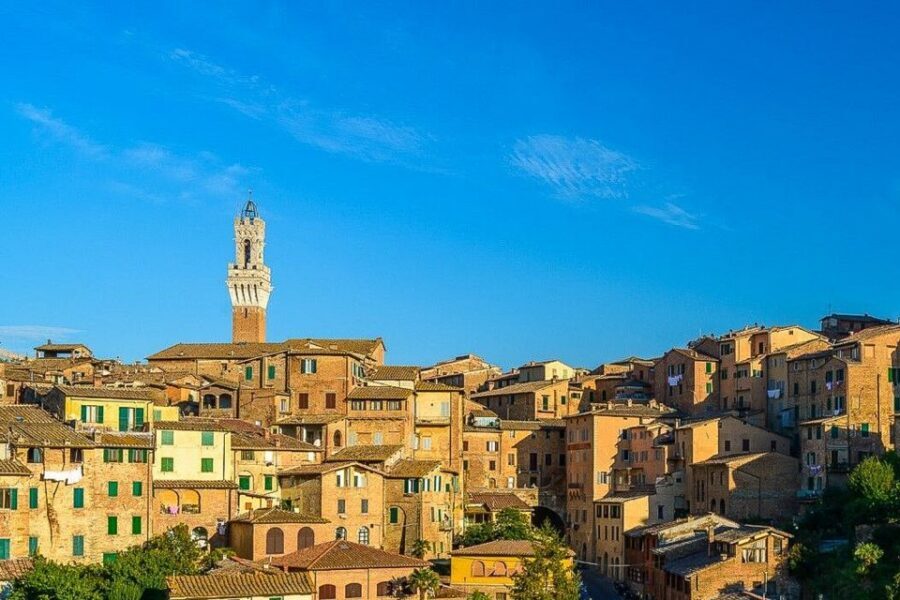
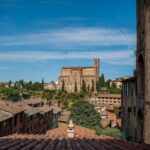
Meet at Piazza San Domenico, under the large tree right in front of the church. This is a good start point because it’s already in the part of town that feels “old Siena” rather than modern spillover. From here, you’re set up to walk uphill-and-around without it feeling like you’re constantly backtracking.
The tour is designed as an efficient first taste. You’re not trying to see every square inch of Siena. Instead, you’re learning where the city’s power lived—politically, economically, and spiritually—so later you can choose where to linger. That’s why the route matters as much as the sights.
One practical note: Siena’s cobblestones look pretty in photos and can feel long underfoot. Wear shoes you already trust for walking. And if you’re heading straight from outdoors into a church, do yourself a favor and follow the dress guidance: covered shoulders and knee-length pants or skirts.
Other Siena Cathedral and Duomo tours we've reviewed in Siena
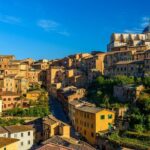
Basilica di San Domenico: more than a stop on the map
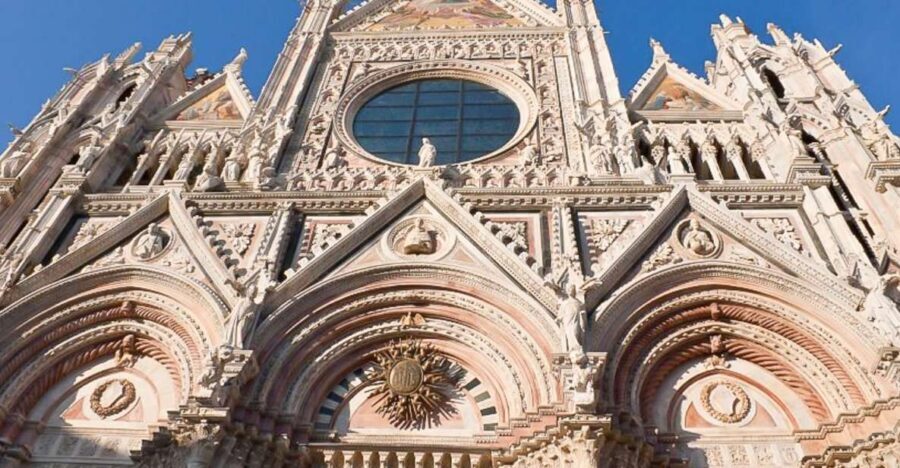
A big early moment is the Basilica di San Domenico. It’s not just architecture you glance at; it’s a place that helps you understand why Siena holds religion in its identity. The tour ties this stop to St Catherine, the patron of Italy, which gives the rest of the walking route a “why it matters” layer.
San Domenico also works because it breaks the day into a human scale. Before you reach the cathedral’s grand interior, you get a calmer, story-driven entry point. If you’re the type of person who likes to know what you’re looking at—why a church exists, who it’s connected to, why the city still talks about it—this is one of the places where the guide’s local voice becomes especially useful.
You should still expect a bit of looking-your-way through crowd flow. Churches are active spaces, and you’ll be moving at a guided pace. But starting here sets up the cathedral stop so it doesn’t feel random.
Piazza del Campo and the Palio: understanding the city’s heartbeat
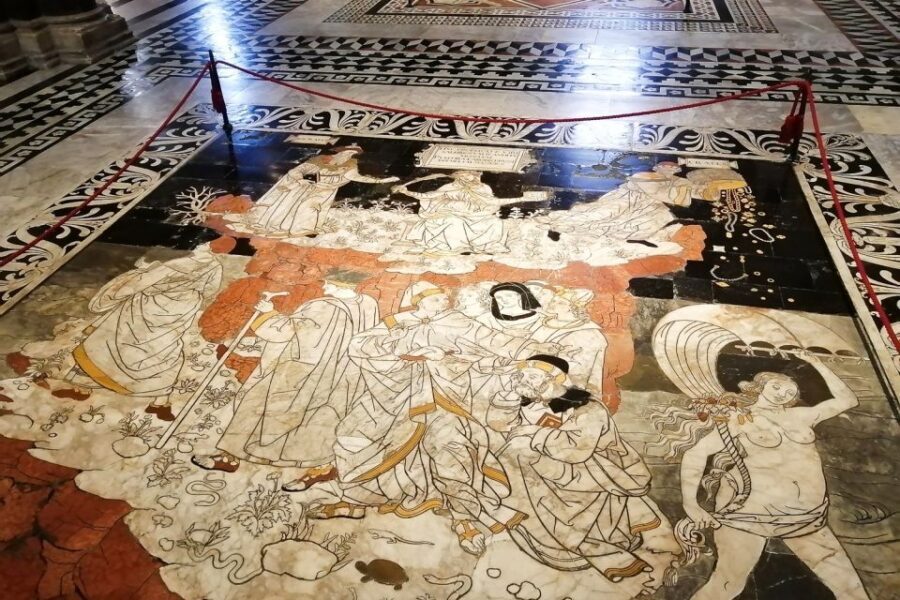
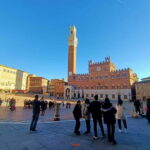
Then you’re walking into Piazza del Campo, Siena’s central stage. On your own, you might see it as one gorgeous shell of stone around a shell-shaped square. With this tour’s framing, the piazza becomes the setting for the city’s best-known ritual: the Palio.
Here’s the key idea the tour helps you grasp: the Palio isn’t just a one-day show. It’s tied to the Contrade, the historic neighborhoods that identify themselves by tradition and competition. That’s why the guide’s explanations matter. They help you see why locals talk about these districts like extended family. You’re not learning a trivia list; you’re learning the social structure that still shapes Siena’s culture.
If you time your own wanderings after the tour, this is where you’ll benefit most. The next time you see a sign, a color scheme, or a detail tied to a district, you’ll recognize what it points to. The city stops being a set of photos and starts feeling like a living place.
Palazzo Salimbeni and Siena’s old wealth: where banking meets politics
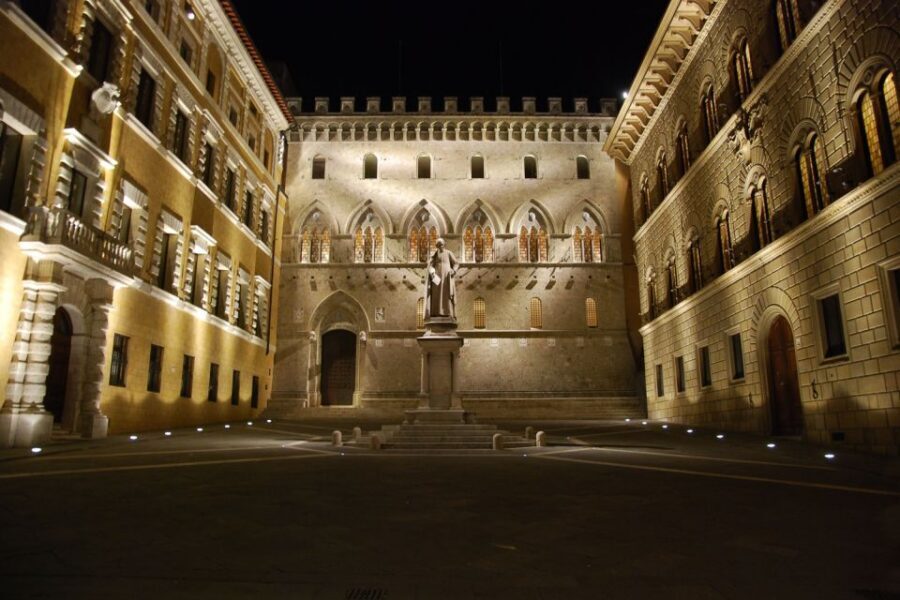
One of the most interesting stops is Palazzo Salimbeni, described on this route as the world’s oldest bank today. Even if you don’t go inside anything bank-related, the point is visible: Siena’s medieval republic wasn’t just about saints and stone. It was about money, trade, and power.
That matters because it changes how you read the architecture. When you see imposing civic buildings, you can understand them as instruments of status—not just decoration. The guide’s job here is to connect the money story to the city’s pride and civic life.
You’ll also notice how the walking route stitches these themes together. You get the religious center at San Domenico, the cultural center at Piazza del Campo, and then the wealth-political narrative in the palaces. That combination is what makes this tour more than a checklist.
Palazzo Tolomei and the main square scenes
After the Salimbeni story, you’ll continue through parts of the center where buildings feel like they’re competing for attention. Palazzo Tolomei is highlighted as an imposing private Gothic building, and the route threads you through the main squares and monuments.
This section is where Siena’s feel becomes physical. The architecture is close enough to touch the street rhythm. You see how the city’s design creates built-in drama: narrow sightlines, sudden openings, and stone details that pop out once you know what to notice.
A small caution: if you’re expecting long photo stops, Siena’s tight quarters can slow you down. The tour moves to keep everyone together. If you want extra time, save your most “I want a perfect shot” moments for after the guided portion.
Other Siena city walking tours we've reviewed in Siena
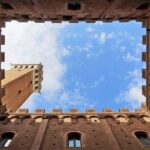

The Duomo of Siena: skip the line, then savor the chapels
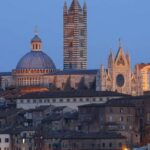
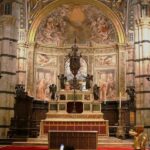
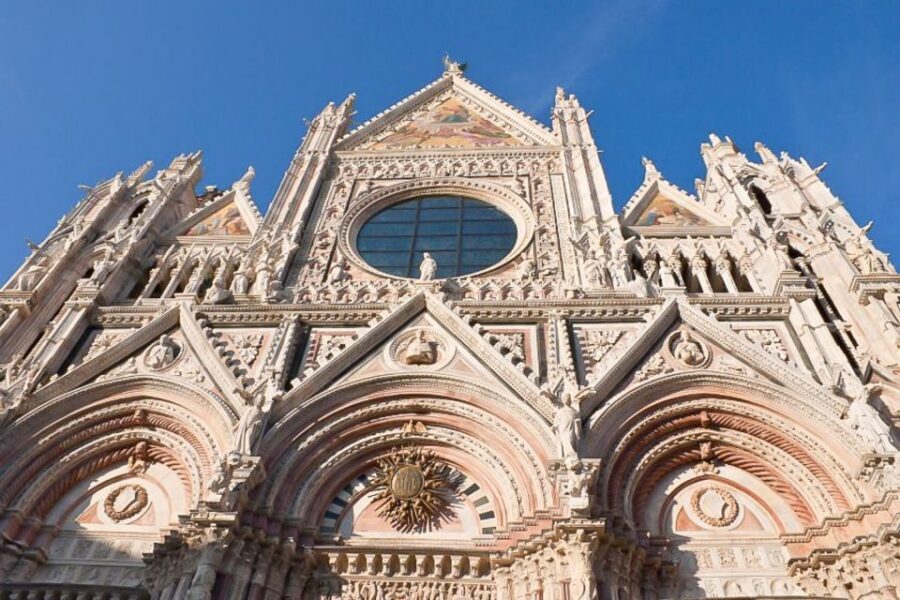
The big payoff is the final cathedral visit. This is a skip-the-line experience to the Duomo of Siena (Cathedral), and it’s worth treating as the centerpiece of your day.
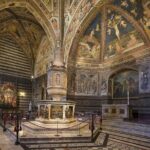
Once inside, the guide focuses on chapels and significant artworks, including masterpieces linked to Donatello, Bernini, and Michelangelo. Even if you know those names already, Siena’s cathedral can still surprise you—because it’s not one style, one century, or one mood. It’s a cathedral that gathers time.
The practical reason skip-the-line matters: the Duomo area can be slow when you’re competing with crowds trying to enter and exit. Cutting that waiting time gives you something more valuable than extra minutes: mental focus. You’re not rushed into the building while impatient energy builds. You can actually look.
Timing-wise, the tour is two hours total. That means you’ll still have to decide how much time you want to linger after the guided part finishes. The good news is that you’re finishing at a place where going back to stare at one chapel is always a good idea.
Group size, headset, and how to get the best sound
In reviews, a consistent theme is how guides use explanation to make streets and neighborhoods feel alive. The tour often includes audio support (headphones/headsets are mentioned), and that helps when you’re moving through busy interiors and street corners.
Still, there’s a real-world consideration: audio can be clearer on some days than others. If you’re sensitive to sound, bring your patience and make sure you’re positioned well when the guide speaks. If you can, don’t stand too far behind the person closest to the guide, since you lose both audio and context.
Also, because this is a walking tour in tight lanes, group size can affect comfort. If the group is large, moving through narrow areas takes longer. That’s not a dealbreaker, but it’s good to know what you’re signing up for: Siena is not wide open.
Price and value: is $47 fair for two hours in Siena?
At $47 per person for a 2-hour guided walk with skip-the-line Duomo tickets, the value is best understood as a time-and-interpretation purchase.
Time: Skip-the-line isn’t just a small convenience. In Siena, the difference between waiting and not waiting can be the difference between feeling stressed or feeling curious.
Interpretation: The tour spends real time on the cultural backbone—Contrade, Palio, St Catherine, and the city’s republic-era pride—then ties it directly to the Duomo interior. If you’ve ever visited cathedrals that feel impressive but distant, you’ll recognize the problem this tour is designed to solve.
Is it expensive for some budgets? It can feel that way if you compare it to an outdoor walking tour with no admissions. But this package isn’t only walking—it includes entry into a major cathedral site and guided access that helps you actually read what you see.
If your priority is seeing Siena’s highlights quickly without losing half a day to logistics, this pricing is in the reasonable zone.
Who this Siena tour is best for
This one fits best if you:
- Want a first-day overview in Siena and plan to return on your own
- Care about connecting art and architecture to real local life (Palio, Contrade, St Catherine)
- Appreciate a guide who talks like a local, not like a script
- Have limited time and still want Duomo entry included
It may not be ideal if you:
- Need a slower pace or lots of unstructured time at each site
- Have mobility challenges (the tour isn’t suitable for people with mobility impairments)
- Are traveling with restrictions that affect church entry dress rules
Quick practical checklist before you go
- Clothing for churches: covered shoulders and knee-length bottoms; wear walking-friendly layers
- Shoes: cobblestones demand traction
- Avoid day-of surprises: if you forget the dress code, you may have trouble entering
- Bring flexibility: the route is efficient, so plan for quick transitions
- For audio support: stay near the front if you want the clearest explanations
Should you book the Siena Walking Tour and Skip-the-Line Duomo Tickets?
I’d book it if you’re planning a tight itinerary and want your Duomo visit to feel guided, not random. The biggest win is the pairing: you get local context in the streets (Contrade, Palio, St Catherine) and then you land in the Duomo with skip-the-line entry so you can focus on the chapels and major artworks. The 2-hour length is also perfect for first orientation, especially if you know you’ll return later.
I would hesitate only if you know you need long, unhurried time in one place. In that case, pair this with a second visit later on your own, so the cathedral doesn’t feel like you’re rushing past your favorite details.
For most people visiting Siena for the first time, this is a smart way to get the city’s meaning fast—and then decide what deserves your extra attention.
FAQ
Where does the tour start?
The meeting point is Piazza San Domenico, under the large tree in front of the church.
How long is the tour?
The tour lasts 2 hours.
What’s included in the price?
You get a 2-hour guided walking tour with an authorized English-speaking local guide plus skip-the-line entrance tickets to the Duomo/Cathedral.
Is hotel pick-up included?
No, hotel pick-up is not included.
What should I wear for church entry?
You need covered shoulders and knee-length pants and skirts, plus shoes suitable for walking on cobblestones.
Are pets allowed?
No, pets are not allowed on this tour.
Is it suitable for mobility impairments?
No, it’s not suitable for people with mobility impairments.