REVIEW · SIENA
Siena Walking Tour with Cathedral and Crypt & Museum Option
Book on GetYourGuide →Operated by Walks In Europe · Bookable on GetYourGuide
One street can change how you see a whole city. This guided Siena walk links the Duomo Complex to the stories behind the Palio, so the landmarks don’t feel like random stops. My favorite part is the reserved, skip-the-line access to the Cathedral. The extended option is even better if you want the crypt and museum too. One catch: since the cathedral is still an operating church, it can close for services even without much notice.
You’ll also like how the walk is paced. It starts at Piazza San Domenico with a small group and a real guide who explains why each neighborhood matters. On routes like this, you’ll often get the kind of context that turns Duccio, Pisano, and Pinturicchio from names into recognizable work you can actually point at.
The main consideration is practical: Siena is walk-and-climb. If you’re sensitive to steep streets (and there are some), this tour may feel more strenuous than you expect. Also follow the dress rules closely—shorts, sleeveless tops, and flip-flops aren’t allowed.
In This Review
- Key things to know before you go
- Start at Piazza San Domenico: where the tour finds its rhythm
- Contradas, Old Ghetto corners, and the Palio story that actually clicks
- Piazza del Campo, Fonte Gaia, and Torre del Mangia viewpoints
- Fonte Gaia
- Torre del Mangia
- Skip-the-line Siena Cathedral: entering a working church with big art
- OPA SI Pass in the 3-hour option: crypt, Museo dell’Opera, Baptistery, and Facciatone views
- The crypt and fresco feeling
- Museo dell’Opera
- Facciatone panorama at your own pace
- Who this Siena tour suits best (and who might find it frustrating)
- Price and value: what $95 gets you in real time saved
- Should you book this Siena Walking Tour with Cathedral and Crypt Option?
- FAQ
- How long is the Siena walking tour with Cathedral access?
- Where do I meet the guide?
- What does the skip-the-line include?
- What’s included in the extended 3-hour option?
- What should I bring or wear?
- Can the Cathedral close while I’m there?
Key things to know before you go
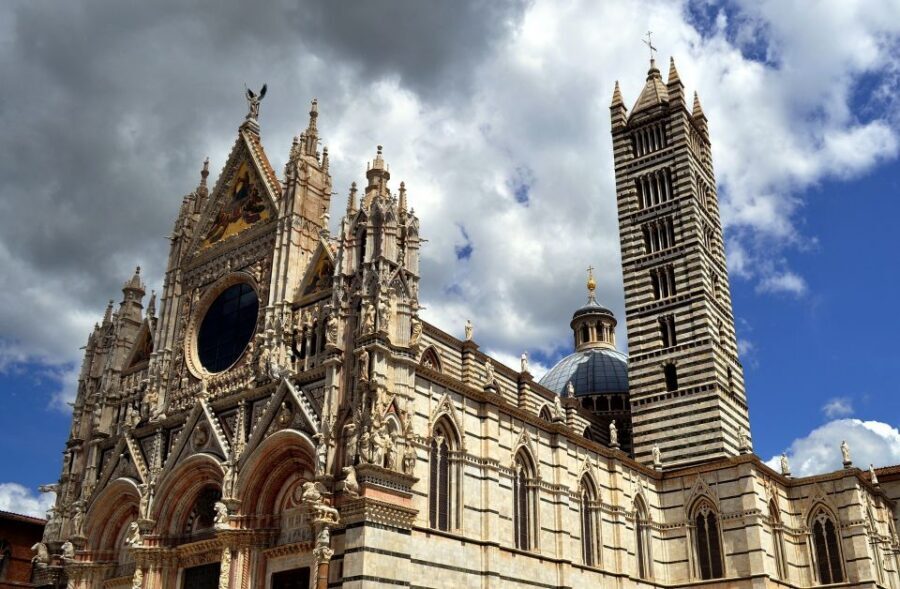
- Skip-the-line Duomo entry: Pre-reserved tickets let you use a separate entrance instead of waiting in the public queue.
- Two or three hours, depending on what you want: A 2-hour version focuses on the Cathedral and key highlights, while the 3-hour option adds the full Cathedral complex experience with OPA SI Pass.
- OPA SI Pass upgrade includes more than the Cathedral: Crypt, Baptistery, the Opera Museum (Museo dell’Opera), and panorama time from the unfinished New Cathedral facade.
- Palio + Contrade stories on the walk: You’ll connect Siena’s districts to the horse race energy—without needing a history degree.
- Local guide energy: People often praise guides for humor, clarity, and answering lots of questions; names like Anna, Dace, Idania, Mare, Flo, Elia Martino, and Daca show up in the guide mix.
Start at Piazza San Domenico: where the tour finds its rhythm
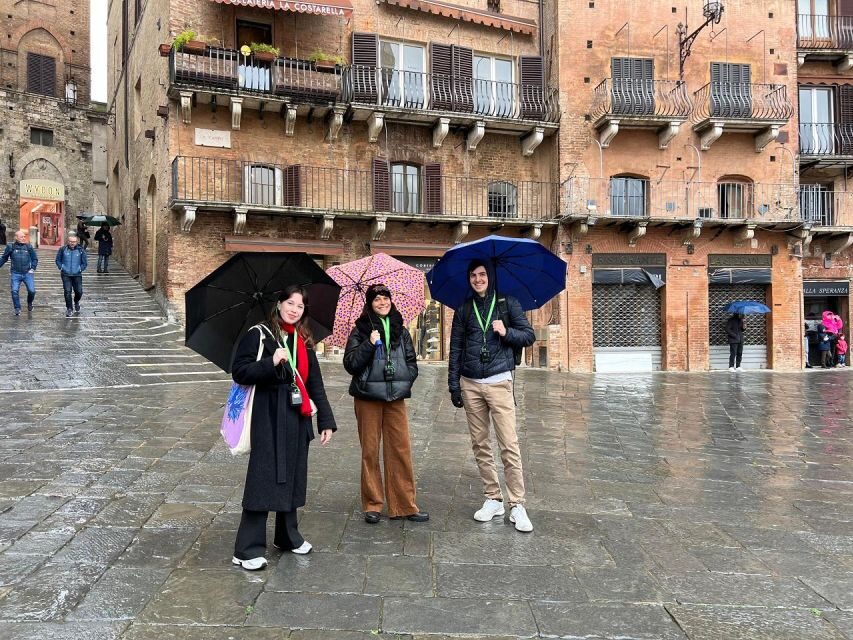
Your meeting point is easy to miss if you walk past too fast. Meet under the big tree by the Basilica of San Domenico. Your guide will be holding a sign with the provider’s logo, and you’ll want to arrive about 5 to 10 minutes early so you don’t cut into check-in time.
This is a small-group style walk. That matters in Siena because the city is narrow, curvy, and full of sudden hills. In a bigger group, you spend more time waiting for people to catch up. In a small group, you keep your momentum—and your guide can actually point out details instead of just rushing to the next corner.
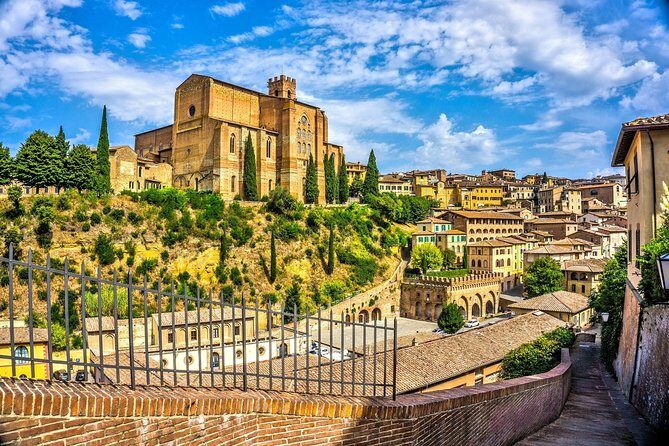
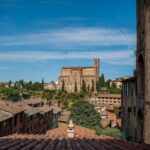
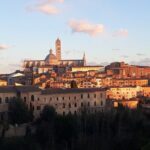
You’ll be walking through parts of Siena that don’t feel like a museum hallway. You start in the Center and then get pulled into the maze: side streets, quiet squares, and viewpoints that appear when you’re already in the right angle. It’s one of those tours where you get your bearings fast, then you start noticing patterns—how the skyline lines up, how streets funnel toward Piazza del Campo, and where the Cathedral’s silhouette keeps returning.
Practical tip: bring a scarf. That isn’t a souvenir suggestion; it’s specifically listed as something to have on hand. And wear shoes you’re comfortable climbing in. Reviews also hint at the steep hills part—so plan for legs, not just eyes.
Other Siena Cathedral and Duomo tours we've reviewed in Siena
Contradas, Old Ghetto corners, and the Palio story that actually clicks
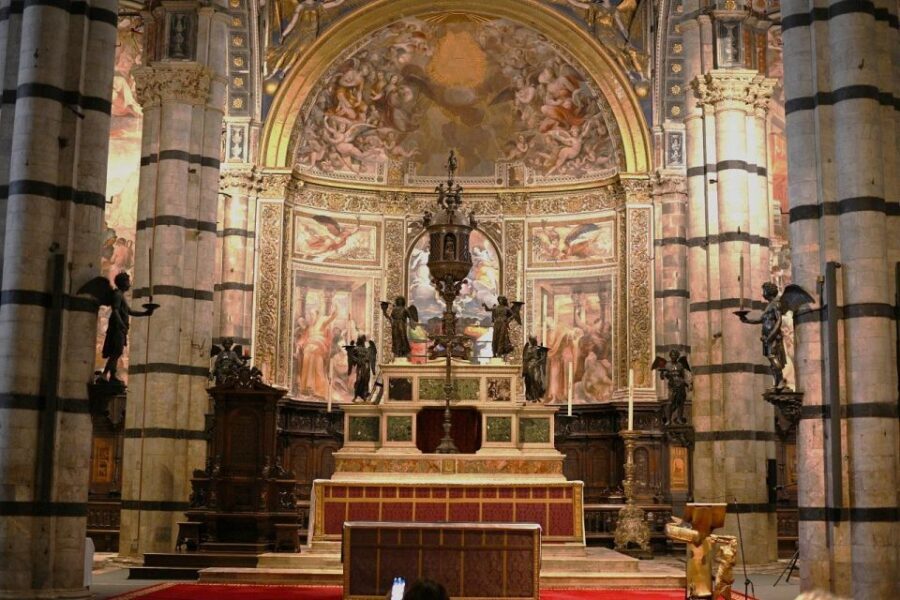
As you walk, your guide ties Siena’s layout to its living traditions. You’ll hear about the Contrade system—Siena’s neighborhood identity—and how those loyalties shape the Palio horse race. The Palio is famous worldwide, but what usually confuses first-timers is how it connects to the streets they’re standing on.
That’s the point of this route. You’re not just hearing random facts. You’re walking through the kind of city blocks where a rival district would have felt close enough to argue with—day to day, not only on race day. Along the way, your guide also points to areas tied to the Old Ghetto and the Tower District, so the city’s layers start making sense instead of stacking up.
You’ll probably notice your guide does two things really well:
- Keeps the story tied to what you’re seeing, like statues, street geometry, and civic spaces.
- Explains why certain places matter during the Palio, not just when the race happens.
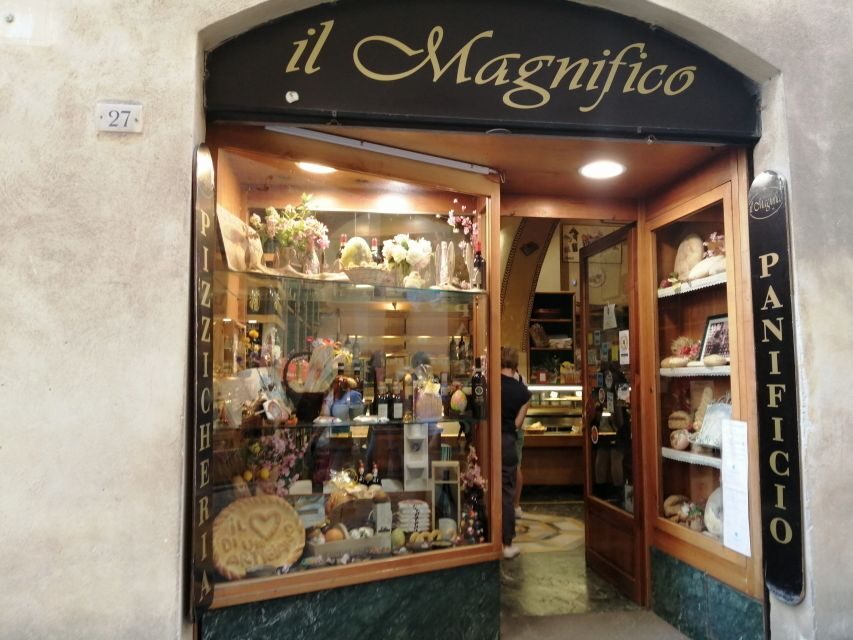
If you’re the type who likes food as part of culture, this tour can fit that too. The walk includes a chance to think about local sweets like Ricciarelli and Panforte—the kind of items Siena is known for that you can also chase after the tour if you want a treat with your new context.
One small note: this is still a walking tour first. If you want long stops to sit down, this may feel like you’re moving most of the time. The tradeoff is you’ll get a clean overview of the city’s big story beats.
Piazza del Campo, Fonte Gaia, and Torre del Mangia viewpoints
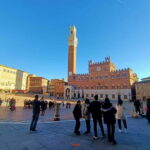
At some point, Siena does what it does best: it makes you look up. The walk builds toward Piazza del Campo, the iconic shell-shaped square where the Palio’s energy becomes physical. You’ll get guided time here, plus the chance to understand why this space is so important.
Before you fully arrive at Piazza del Campo, you’ll also pass through a few landmark stops designed to help you read Siena from multiple angles.
Two highlights stand out:
Fonte Gaia
In Piazza del Campo, you’ll pause at Fonte Gaia, a famous fountain decorated with detailed reliefs showing biblical scenes. It’s the kind of stop where it helps to have a guide. The fountain looks like art and architecture together—and with explanation, you start noticing the messages built into the stonework.
Torre del Mangia
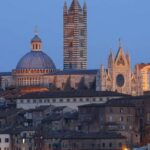
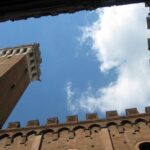
The route also includes the Tower of Mangia area. Even if you don’t spend a long time inside, the point is the view and the skyline. Siena’s towers, roofs, and the Cathedral dome create those famous sight lines that photographers always chase. A guide helps you understand what you’re looking at and why that spot is worth the detour.
This portion of the tour works well for first-timers because it balances two needs: you get famous postcard sights, but you also learn how the city connects them logically. You’re not collecting photos—you’re building a map in your mind.
Other Siena city walking tours we've reviewed in Siena

Skip-the-line Siena Cathedral: entering a working church with big art
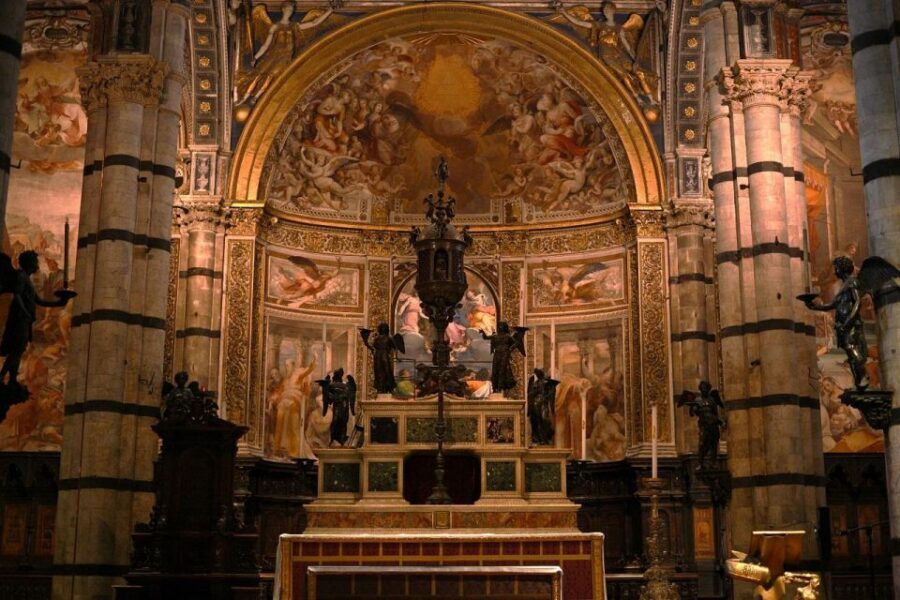
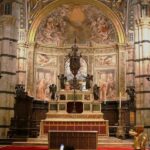
The Cathedral of Siena is the centerpiece. And this tour gives you an advantage: pre-reserved priority tickets and a skip-the-line entrance.
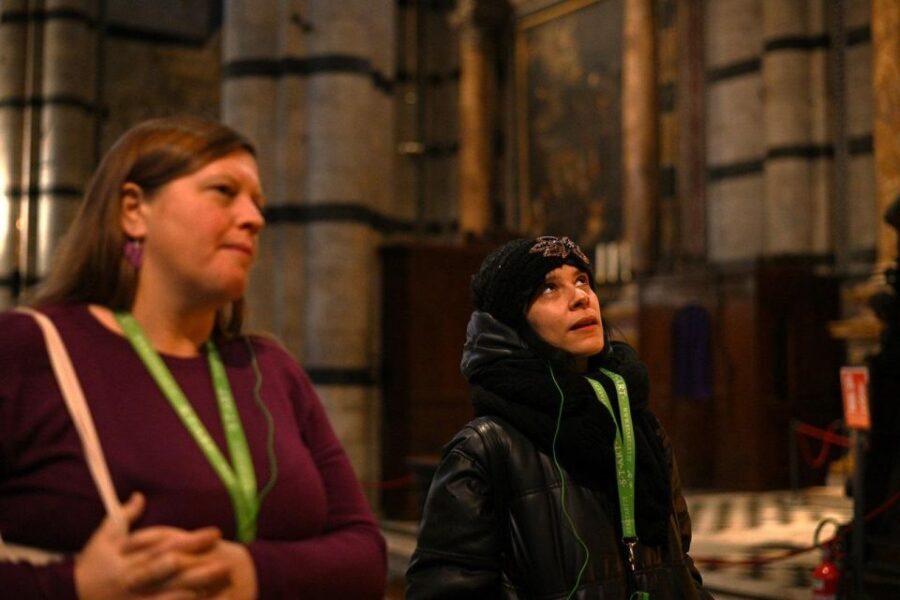
Once you enter, you’ll get guided time that focuses on the Cathedral’s standout art and layout. Siena’s Duomo isn’t just one highlight; it’s a whole chain of rooms and works you can only appreciate when someone helps you orient.
Your guide will point out major artists linked to Siena’s legacy, including:
- Duccio
- Pisano
- Pinturicchio
You’ll also spend time on a key highlight inside the Cathedral complex: the Piccolomini Library. This library is famous for its visual program, and having a guide there helps you understand what you’re seeing instead of just admiring it.
Important reality check: the Cathedral is an operating church, so it can close for liturgical reasons even without warning. That’s not the operator being difficult—it’s church life. If you’re booking this as a single fixed must-do, keep expectations flexible. On the day you go, you might still see enough to feel satisfied, but you should know closures are possible.
Dress note again matters here. Shorts and flip-flops aren’t allowed. If you come in with standard “summer travel” outfits, you may have trouble getting in comfortably. Siena wants respectful attire. A scarf helps too.
One more timing detail you should know if you’re traveling in certain months: the floor mosaics have periods where they’re fully uncovered, and other periods where they’re partially covered. If mosaics matter a lot to you, double-check your travel dates before you set your heart on a specific floor view.
OPA SI Pass in the 3-hour option: crypt, Museo dell’Opera, Baptistery, and Facciatone views
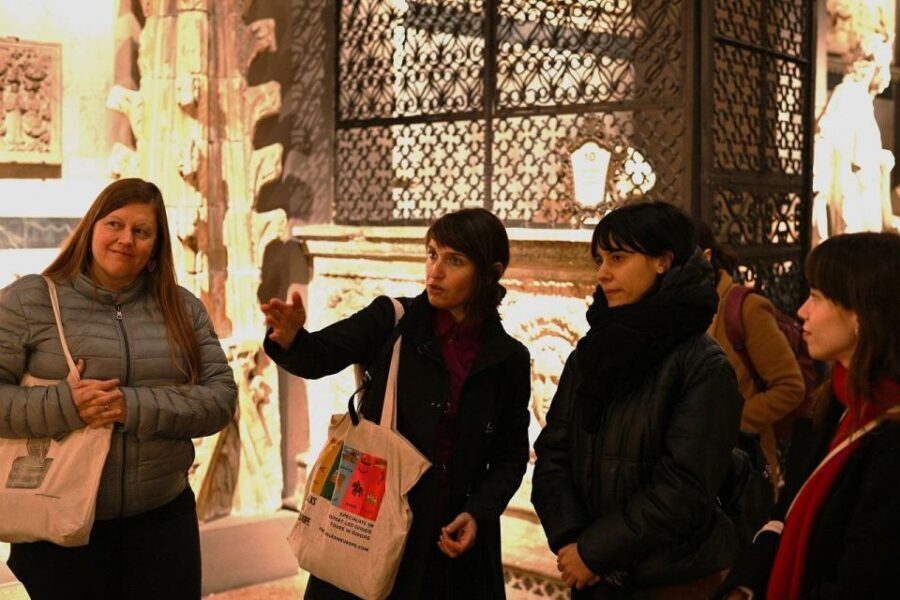
If you choose the extended 3-hour version, you’ll add the OPA SI Pass access. This is where the tour becomes more than “Duomo basics.”
With the pass, you’re not limited to the Cathedral itself. You’ll be able to access the broader Cathedral complex, including:
- the Crypt (with centuries-old frescoes)
- the Museo dell’Opera (including sculptures and stained glass windows)
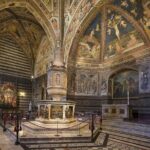
- the Baptistery
- panorama time from the New Cathedral Facade area (the Facciatone, the unfinished facade)
Why this upgrade is worth it: lots of people see the big exterior and the most famous interior rooms, then leave. The crypt and museum are where you feel the Cathedral as a project that kept evolving. You also get a more complete sense of the artistic and civic power Siena invested in this site.
The crypt and fresco feeling
The crypt’s frescoes are a different atmosphere than the bright cathedral rooms. If you like religious art, stone textures, and the sense that you’re stepping into older layers of time, this is often the moment people remember later.
Museo dell’Opera
The Opera Museum is practical brilliance: it helps you see how much work went into sculpture and stained glass, and how the Cathedral complex communicates power through craftsmanship.
Facciatone panorama at your own pace
After the guided portion ends, you can continue on your own at the Facciatone viewpoint. This part is especially good if you want a quiet minute to absorb Siena’s skyline without someone talking the whole time. You’ll look over Siena and out toward the countryside, and the city suddenly feels like a map you can walk through.
If you like structured tours but still want room to breathe, the mix here is good: guided explanation where it matters, plus self-time at the viewpoint.
Who this Siena tour suits best (and who might find it frustrating)
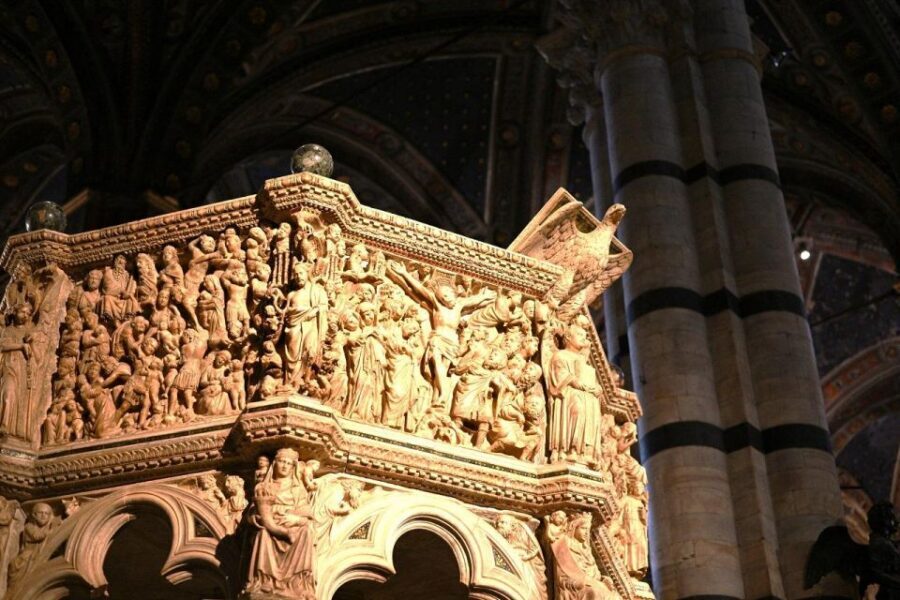
This tour is a strong match if you’re in Siena for the first time and want the essentials with context. The Palio and Contrade explanation is exactly what helps people stop thinking of Siena as only a pretty hill town and start seeing it as a city with identity built into its streets.
You’ll also like it if you care about art but don’t want to guess your way through it. The guide points out major figures connected to the Cathedral and brings attention to places like the Piccolomini Library.
It may be less ideal if you need lots of sitting time or step-free access. The information you’re given includes restrictions and notes that it is not suitable for wheelchair users and people with mobility impairments, plus there’s a dress code that rules out shorts, short skirts, sleeveless shirts, and sandals/flip-flops.
Also, this is not the right move if you want to wander independently from stop to stop. It’s guided, timed, and designed for flow. You won’t be able to join late once it has started.
If you’re flexible and ready for a good walking day, this tour hits a sweet spot: you get a guided overview plus optional “go deeper” Cathedral complex time.
Price and value: what $95 gets you in real time saved
At $95.16 per person, you’re paying for three things that matter in Siena:
- Priority access
Reserved entry and a separate entrance help you avoid the worst of the line experience. In a place like Siena—where time gets eaten by narrow streets and waiting—saving queue time is more valuable than it sounds.
- Guided interpretation
The Cathedral is not easy to read on your own unless you already know what to look for. The guide helps you connect art and architecture to stories like the Palio and Contrade system. That turns a visit into understanding, not just looking.
- A smart upgrade path (if you choose it)
If you go for the 3-hour option, you’re not just paying for extra time. You’re adding access enabled by the OPA SI Pass to the crypt, museum, baptistery, and facciatone panorama. Those are the exact parts that help you feel you got the full Cathedral experience.
If you’re only doing one Siena tour and you’re serious about the Duomo, this price starts to make sense fast—especially if you would otherwise spend that saved time trying to plan tickets yourself.
Should you book this Siena Walking Tour with Cathedral and Crypt Option?
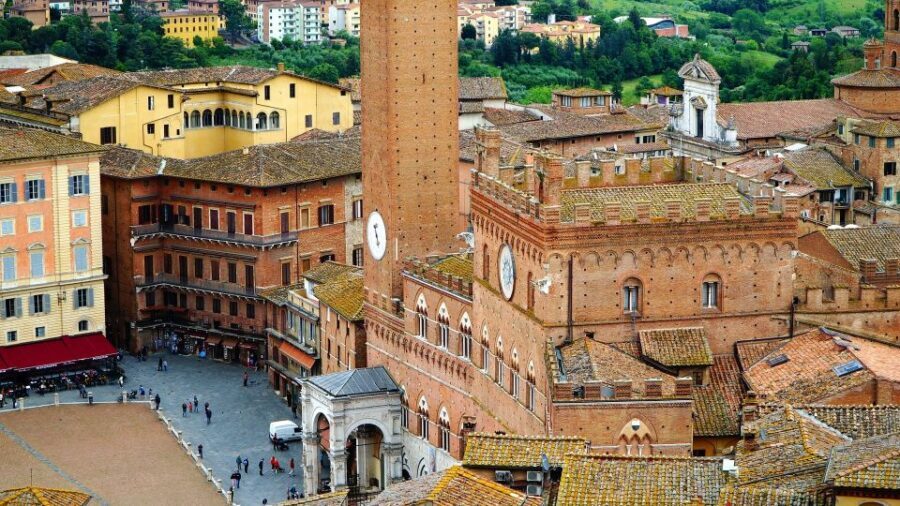
Yes—if your priority is a guided overview of Siena that includes skip-the-line Cathedral access, plus a path to see more if you have the time. The best reason to book is simple: this route ties together the city’s public spaces (Palazzo-like squares and viewpoints) with the Cathedral complex, so you leave with a clearer sense of how Siena works.
Choose the 2-hour version if you want the Cathedral highlights without adding extra Museum/crypt time. Choose the 3-hour OPA SI Pass option if you want the crypt and Museo dell’Opera, plus the Facciatone viewpoint—those are the parts that often make the difference between a quick Duomo stop and a full Cathedral complex experience.
One last practical checklist before you decide:
- Do you want the Palio/Contrade context as you walk, not after?
- Are you comfortable with some uphill walking?
- Can you follow the entry dress rules (scarf, no sandals/flip-flops, no shorts/sleeveless)?
If those boxes are true, this is a very solid way to spend part of your Tuscany days.
FAQ
How long is the Siena walking tour with Cathedral access?
The tour is offered in a 2-hour version and a 3-hour extended version. The exact starting times depend on availability.
Where do I meet the guide?
Meet under the big tree by the Basilica of San Domenico in Piazza San Domenico, Siena (Piazza S. Domenico, 5). Your guide will hold a sign with the activity provider logo.
What does the skip-the-line include?
You’ll have priority access to the Siena Cathedral with skip-the-line entry through a separate entrance.
What’s included in the extended 3-hour option?
The extended option includes priority tickets for the Siena Cathedral’s complex using the OPA SI Pass. This covers the Cathedral and Piccolomini Library, Opera Museum (Museo dell’Opera), Panorama from the New Cathedral Facade (Facciatone), Crypt, and the Baptistery.
What should I bring or wear?
Bring a scarf. You’re not allowed to wear sandals or flip-flops, shorts, short skirts, or sleeveless shirts, and baby strollers, luggage, or large bags are not allowed.
Can the Cathedral close while I’m there?
Yes. The Cathedral is an operating church and it can close to visitors for liturgical reasons, even without warning.