REVIEW · SIENA
Siena: Cathedral Complex Pass with Audio Guide (OPA SI PASS)
Book on GetYourGuide →Operated by GetYourGuide Tours & Tickets GmbH · Bookable on GetYourGuide
Siena’s Duomo feels like a whole world in one ticket. With the OPA SI PASS, you can roam the cathedral complex areas on your schedule and use a smartphone audio guide to make sense of everything you’re seeing. I especially like the access to the big-name stops—crypt, Piccolomini Library, and the Museo dell’Opera—without needing a separate ticket for each one. One thing to plan for: the Facciatone viewpoint needs extra time, since people are guided up/down in small groups.
What makes this pass work well is that it’s built for self-paced touring. You’re not stuck waiting for a group to move; you can linger on the mosaic marble floor and then head underground to the crypt, which stayed hidden for more than seven centuries. The only real drawback is that even with the pass, you may still lose some time at the voucher exchange/ticket-printing step if the office line is busy.
In This Review
- Key takeaways
- Siena’s Duomo complex in one smart ticket: what the OPA SI PASS actually gives you
- Exchanging your voucher at Cripta del Duomo di Siena (without losing your momentum)
- Duomo floor, Donatello and Michaelangelo, and the Baptistery of San Giovanni
- Crypt + Piccolomini Library: the secret underground and the frescoed story of Pope Pius II
- Museo dell’Opera and Oratory di San Bernardino: where the artifacts explain the cathedral
- Facciatone viewpoint climb: plan your final timing around the small groups
- Using the digital audio guide well: your phone is the tour engine
- Price and value: is $21 for a Duomo complex ticket a good deal?
- Who should book the OPA SI PASS, and who might want something else
- Should you book the OPA SI PASS pass for Siena?
- FAQ
- What does the OPA SI PASS include?
- Which part of the cathedral complex is not included?
- How long is the pass valid, and when do I need to use it?
- Where do I exchange my voucher?
- Do I need a live guide for this experience?
- What time should I plan my last entry?
Key takeaways
- All-areas Duomo access (except the rooftop/roof tour) means fewer separate tickets and less decision fatigue
- Digital audio guide on your phone helps you connect the art to the building you’re standing in
- Piccolomini Library + Pinturicchio frescoes give you an upstairs view of Pope Pius II’s story in vivid detail
- Crypt first-time-wow: hidden underground spaces that keep changing the way you see the cathedral
- Museo dell’Opera fills in the backstory with sculptures and paintings tied to the Duomo’s past
- Facciatone viewpoint needs timing because entry and exit happen in small batches
Siena’s Duomo complex in one smart ticket: what the OPA SI PASS actually gives you
The OPA SI PASS is for people who want the Duomo complex without doing math all afternoon. For about $21 per person, you get entry to the core sites inside Siena’s cathedral compound: the Duomo, Baptistery of San Giovanni, Crypt, Piccolomini Library, Museo dell’Opera, and access to the Facciatone viewpoint. You also get a digital audio guide and a booking fee.
Here’s the practical value: the Duomo complex is a “many-doors, many-levels” place. It’s not one room, and it’s not just sightseeing on flat ground. This pass is designed so you can move from sculpture and mosaics to underground frescoes to museum artifacts without stopping your day to buy extra entries.
Important limit: this pass includes everything excluding the rooftop. That roof entrance is tied to the separate Gate of Heaven option, so if that’s on your must-do list, plan to add it separately.
Validity note: the pass is valid for 3 days (check availability for starting times), but the voucher must be used on the booked date. In plain terms, you’re not meant to treat this like a week-long museum card you can start whenever you want.
Other Siena Cathedral and Duomo tours we've reviewed in Siena
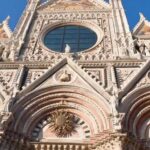
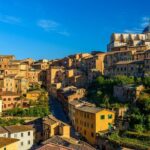
Exchanging your voucher at Cripta del Duomo di Siena (without losing your momentum)
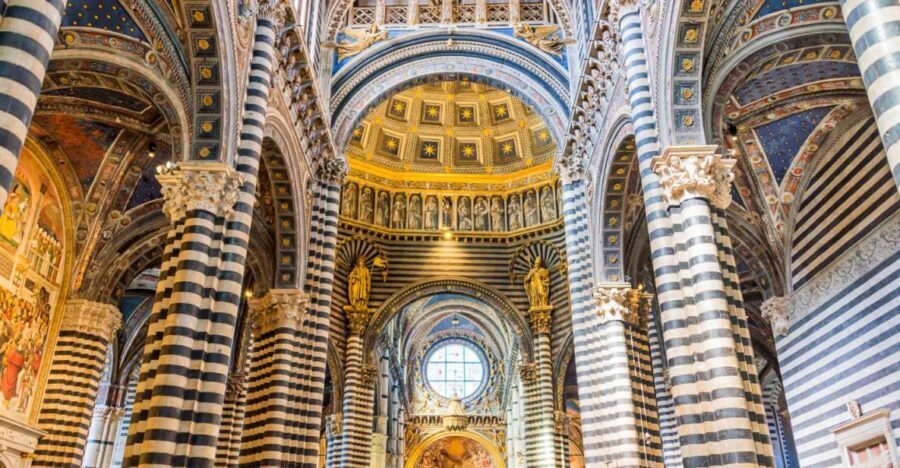
Your visit starts with a simple but easy-to-miss step: exchange your voucher at the official ticket office at Cripta del Duomo di Siena. That matters because you’re not just scanning a QR code and walking in. You’ll still need that exchange step first.
A small but real tip: if the meeting point feels confusing, look for the reserved ticket line and the exchange spot near the cathedral entrance area. One helpful detail from on-the-ground experience: people often find it easier if they check signage to the left of the cathedral entrance rather than going straight to the main doors.
Plan your timing like this:
- Aim to arrive with enough buffer that you can exchange and get moving.
- Remember that the last entry is 30 minutes before closing time. If you leave your final area too late, you’ll get cut off.
If you’re the type who likes to start early and take photos without stress, earlier time slots can help. If you’re more relaxed, just protect yourself with buffer time for the exchange step.
Duomo floor, Donatello and Michaelangelo, and the Baptistery of San Giovanni
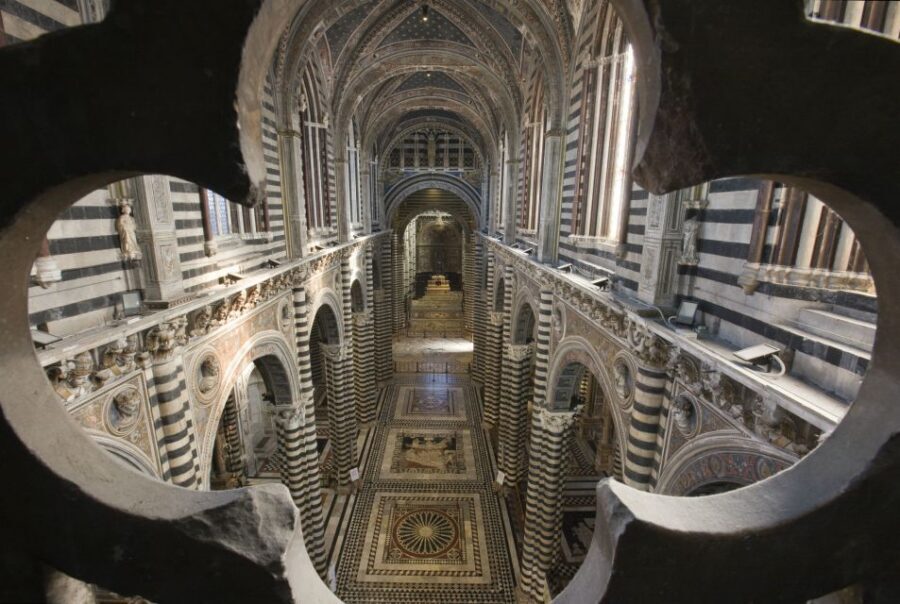
Once you’re in, the cathedral delivers big impressions fast—space, stone, and art placed so you notice details even when you’re looking up.
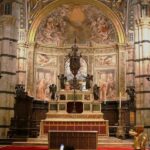
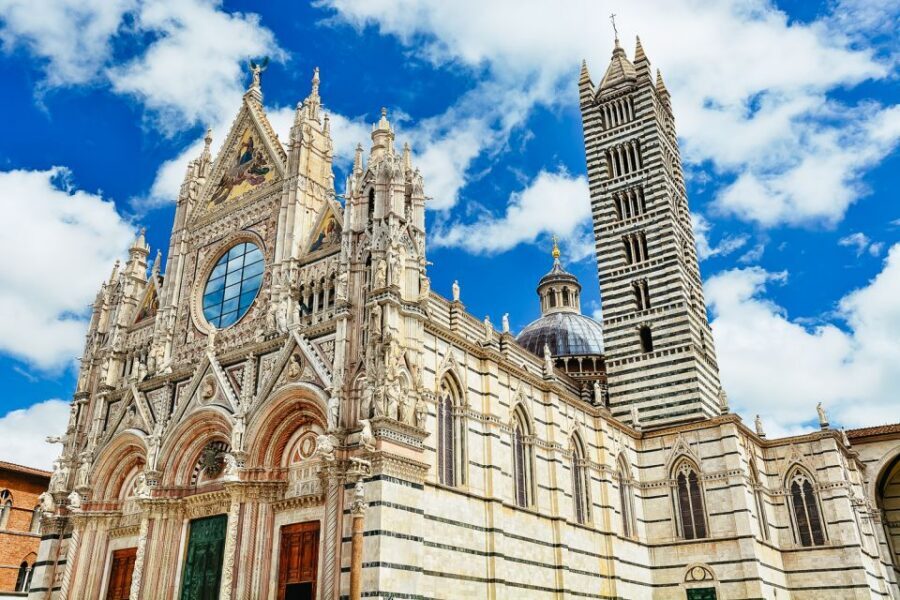
Inside the Duomo, you’ll get the chance to walk along the mosaic marble floor. This floor is more than decoration. It helps tell stories in a way you can actually follow with your feet, and it also gives you a “biblical path” feeling as you move between major features.
This is also where you’ll run into major sculpture moments. Among the works you’ll spot are:
- The Feast of Herod by Donatello
- St. Paul by Michaelangelo
These aren’t background pieces. The way they’re placed makes them a series of pauses—stop, read, look again, then continue. The pass gets you access, but your audio guide is what helps those names and subjects land in your brain.
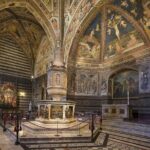
Then head to the Baptistery of San Giovanni, which is included. This is where the “okay, wow” moment is usually easiest to hit. You’ll be able to see the Baptismal Font, and it’s one of those objects that makes the cathedral feel tied to lived religious life—not just architecture and tourism.
Crypt + Piccolomini Library: the secret underground and the frescoed story of Pope Pius II
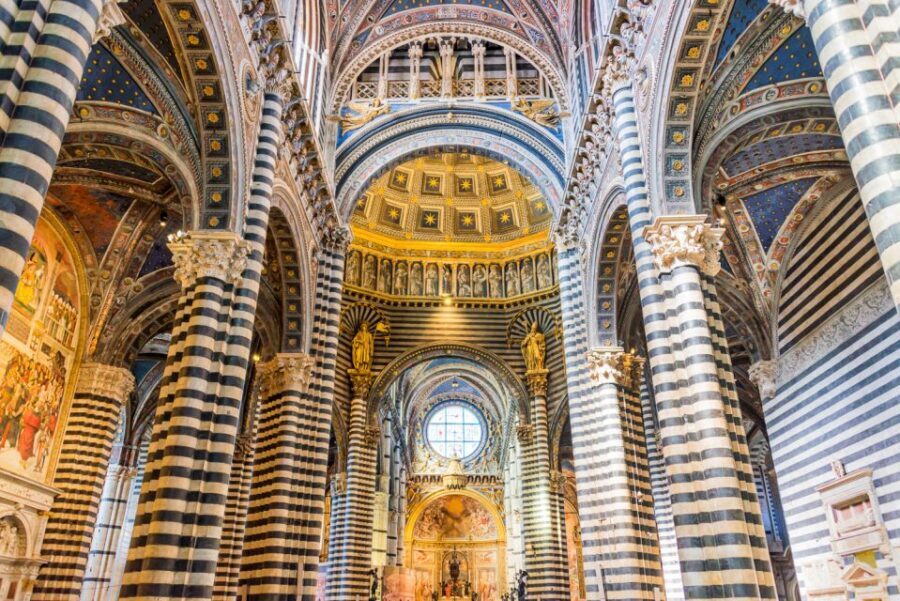
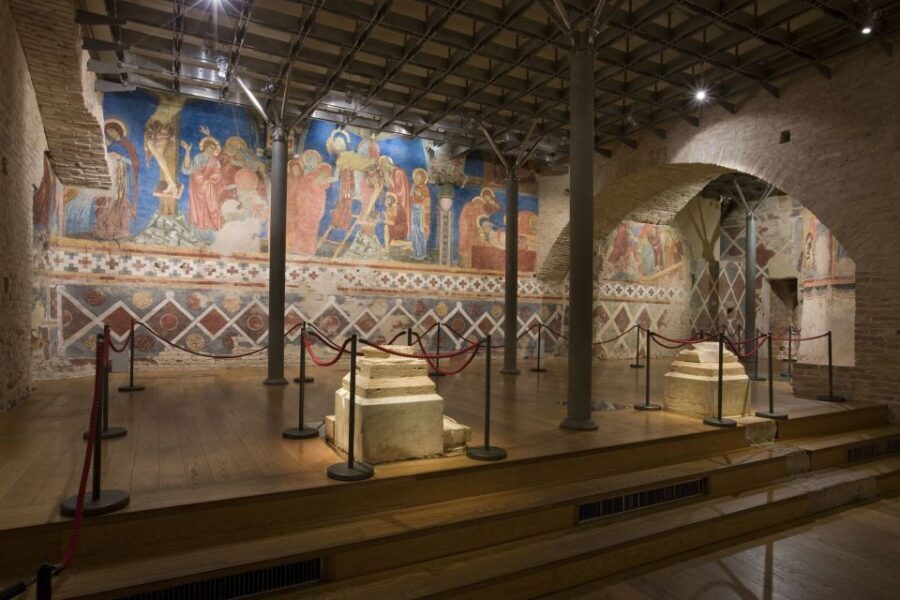
After the bright, public parts of the complex, the Crypt changes the temperature of the visit. It’s underground, and it carries the feeling of a place that’s been protected and waiting. The crypt is described as having remained hidden for more than seven centuries, and that “hidden time” matters because it makes the space feel ancient in a physical way.
What you’ll be looking for here is the art atmosphere—especially frescoes. If you like seeing how churches used to teach through images, the crypt is a strong place to slow down. There’s a reason this stop gets singled out: it’s the kind of setting where even a quiet visit becomes memorable.
From there, shift upward in a very literal way to the Piccolomini Library. This room is famous for its fresco cycle by Pinturicchio, depicting ten episodes from the life of Pope Pius II. You’re going from underground survival to a full storytelling ceiling-and-wall experience.
Practical tip for this area: bring yourself to one “panel” at a time. If you try to take in the whole cycle in one glance, it all blurs. Instead, let your eyes follow the narrative and let the audio guide point out what to look for.
You’ll also notice how the library fits the cathedral complex. It’s not random museum space. It’s part of the same cultural world, just told with different tools.
Museo dell’Opera and Oratory di San Bernardino: where the artifacts explain the cathedral
Now the day becomes more “learn mode,” but in a satisfying way. The Museo dell’Opera is included and it’s the place to understand what you’ve already seen—and what the Duomo used to have.
Think of it as the cathedral’s memory box. You’ll find:
- archaeological fragments tied to the cathedral’s past
- artwork that once belonged to the cathedral
- Gothic sculptures including works by Giovanni Pisano
- paintings by Ambrogio and Pietro Lorenzetti
If you’re the type who likes to connect art to time periods, this museum helps you sort “what happened when,” and why styles shift.
One extra watch-for item: some visitors note a sky-walk/raised walkway within the museum circuit. Since you won’t see it from the outside, it’s worth asking where the raised viewpoints are once you’re inside.
Then, finish this side of the complex at the Oratory of San Bernardino, which includes the Diocesan Museum of Religious Art. This part focuses on Siennese religious art across a wide range—paintings from the 13th to the 18th century—with the museum centered around the upper oratory chapel.
This is a good stop for balancing the day. If you’ve been staring at stone, mosaics, and frescoes, the museum approach lets you compare styles and themes in a more controlled way.
Other guided tours in Siena



Facciatone viewpoint climb: plan your final timing around the small groups
The last stop is the Facciatone viewpoint. It’s included in the pass, but it behaves like a “finish strong” area rather than a casual wander.
Why? The climb and exit work in a controlled way. People are sent out in small batches (groups of about 15–20), and the path is narrow enough that the flow can feel slow even when you’re eager for the view.
So don’t schedule your viewpoint like it’s a quick 10-minute photo stop. Treat it as your final chapter and give it enough time to breathe. If you’re aiming for light changes—like sunset vibes—also remember that you must stay aware of closing cutoffs, since the last entry is 30 minutes before closing time.
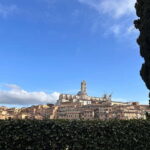
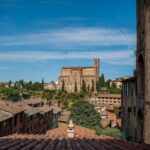
When you arrive, you’ll get panoramic views over Siena and the surrounding rolling Tuscan hills. This viewpoint is one of the best ways to end because it turns all the cathedral details into “city context.” You start seeing how the Duomo sits inside Siena’s shape.
Using the digital audio guide well: your phone is the tour engine
This pass includes a digital audio guide, delivered through a smartphone setup. The most practical thing you should know is that you should bring your own cell phone so you can access the audio.
What I like about audio guides like this one is that they turn the cathedral into something you can process. Instead of just reading placards (or ignoring them), you get guided attention for what matters: history, architecture, and the meaning behind the art.
You also control pacing. If one stop grabs you—say the crypt or the Piccolomini frescoes—you can slow down. If another room feels less urgent, you can move faster. This suits solo visitors and couples who want the freedom to decide moment to moment.
Just a quick “do this, not that”:
- Put your phone away for a few minutes when you first enter a room. Look first, then listen.
- After listening, look again. Audio and visuals click together better on the second pass.
Price and value: is $21 for a Duomo complex ticket a good deal?
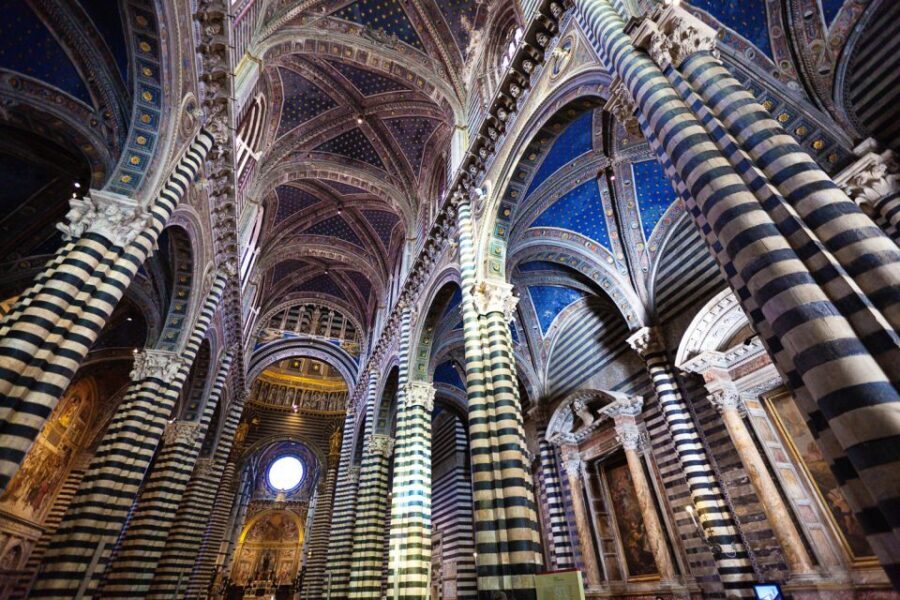
At $21 per person, this pass is priced like a bargain for how many distinct parts of the complex you get to visit. You’re not paying for one monument—you’re paying for a whole connected system: cathedral, baptistery, underground crypt, library frescoes, museum artifacts, and a viewpoint.
Here’s where the value is most real for you:
- Time value: buying one pass saves your day from multiple separate decisions and separate lines.
- Learning value: the audio guide makes the complex easier to understand instead of feeling like a checklist.
- Flow value: you can build a full circuit without constantly “stopping to check tickets.”
That said, it’s not magic. If you hit a busy period, you may still face waiting at the exchange step. And you’ll need enough stamina because the complex is layered—both physically and emotionally.
Also keep in mind what’s not included: the Gate of Heaven / rooftop. If the rooftop experience is your top priority, budget for that add-on.
Who should book the OPA SI PASS, and who might want something else
This pass fits best if you want:
- self-guided touring with an audio guide you can pause and restart
- a full sweep of the Duomo complex, not just the headline sights
- art and architecture that connects across spaces (cathedral → crypt → library → museum)
You’ll likely be happiest with this ticket if you’re traveling in a small group, solo, or with someone who doesn’t mind flexible pacing.
You might consider an alternative approach if:
- you want a live guide for every stop (this one is no live guide included)
- rooftop access is non-negotiable, since the Gate of Heaven entrance isn’t part of this pass
- you’re short on time and would rather focus on only the biggest highlights
Should you book the OPA SI PASS pass for Siena?
I think it’s a smart book if your goal is to see the Duomo complex as a connected experience. For the price, you’re getting access to the cathedral core, the crypt, Piccolomini Library, Museo dell’Opera, and the Facciatone viewpoint—plus a digital audio guide that helps the day make sense.
My decision advice is simple:
- Book it if you want maximum access and you’re okay using your phone for narration.
- Think twice if you’re only interested in one or two signature stops, or if rooftop access is the main reason you’re coming.
If you do book, go in with a plan for pacing: allow time for voucher exchange, take your time in the crypt and Piccolomini Library, and treat the Facciatone viewpoint as your last, time-sensitive stop. Done right, this pass lets Siena’s cathedral complex feel less like a site list and more like a full story you can walk through.
FAQ
What does the OPA SI PASS include?
It includes entry to the Duomo of Siena, Baptistery, Crypt, Piccolomini Library, Museo dell’Opera, and access to the Facciatone viewpoint. It also includes a digital audio guide and a booking fee.
Which part of the cathedral complex is not included?
The pass excludes the rooftop experience, including the Gate of Heaven entrance.
How long is the pass valid, and when do I need to use it?
The pass is valid for 3 days, and you must use the voucher on the booked date.
Where do I exchange my voucher?
Start by exchanging your voucher at the official ticket office at Cripta del Duomo di Siena.
Do I need a live guide for this experience?
No. The pass includes a digital audio guide, not a live guide.
What time should I plan my last entry?
The last entry to Siena Cathedral is 30 minutes before closing time.