REVIEW · SIENA
Siena: Digital Guide made with a Local for your Tour
Book on GetYourGuide →Operated by Walking Cap · Bookable on GetYourGuide
Siena is best when you can slow down. This digital guide with a local turns the historic center into a self-guided walk with audio, trivia, and food ideas timed to what you’re looking at. I love the freedom to move at your pace through Siena’s main monuments, and I love that it’s built around local stories, curiosities, and where locals actually eat. The one thing to consider: it’s internet-dependent and there are no included headphones, so you’ll want a charged smartphone and a workable sound setup.
You can start when you want, and once you buy it you get a link and password to begin your experience. The total walking is about 4 km, which is very doable for most people, but it’s still real walking in Siena’s streets, not a sit-and-watch tour. One possible drawback is that you won’t meet a person in real life to answer questions on the spot, since you’re guided through your phone instead.
In This Review
- Key things I’d focus on before you go
- Solo Siena with a local in your pocket
- How the digital route actually keeps you on track
- The walk: about 4 km of real Siena streets
- Piazza del Campo: where the audio helps you see the square’s “why”
- Monument stops where you choose to linger (and when to skip)
- Local food advice you can use the same day
- Curiosities and funny bits that make Siena feel human
- Price and value: is $6 really enough?
- Who this tour fits best (and who should look elsewhere)
- A smart way to use the guide in the real world
- Should you book Siena: Digital Guide made with a Local for your Tour?
- FAQ
- Do I need headphones for this digital guide?
- How much walking is involved?
- Do I need internet access?
- What languages are available for the audio guide?
- Can I start the tour at any time?
- Are monument entrance fees included?
- Do I have to meet a guide in person?
- Is it wheelchair accessible?
- Can I start from somewhere other than the train station?
Key things I’d focus on before you go
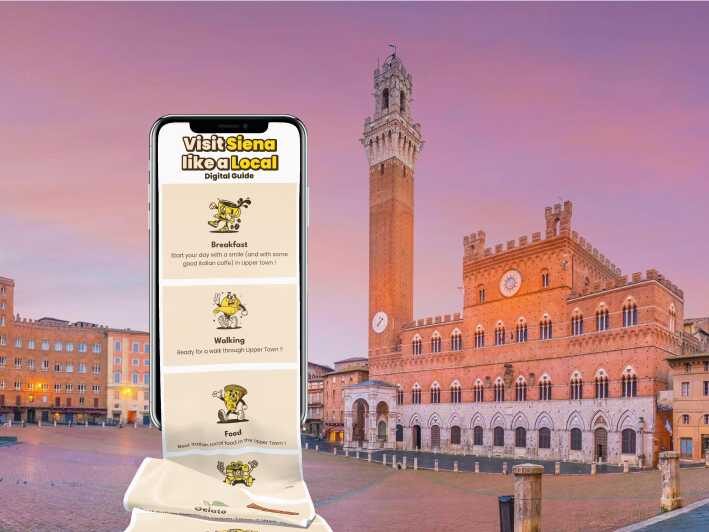
- Local-made stories: you get anecdotes and trivia, not just dates and facts
- Google Maps route: the itinerary is tied to walking directions so you don’t wander aimlessly
- Monuments, your pace: you can linger, read, or skip without guilt
- Food guidance: restaurant advice and typical dishes are part of the route
- Curiosities: you’ll encounter weird little details about the city and its monuments
Solo Siena with a local in your pocket
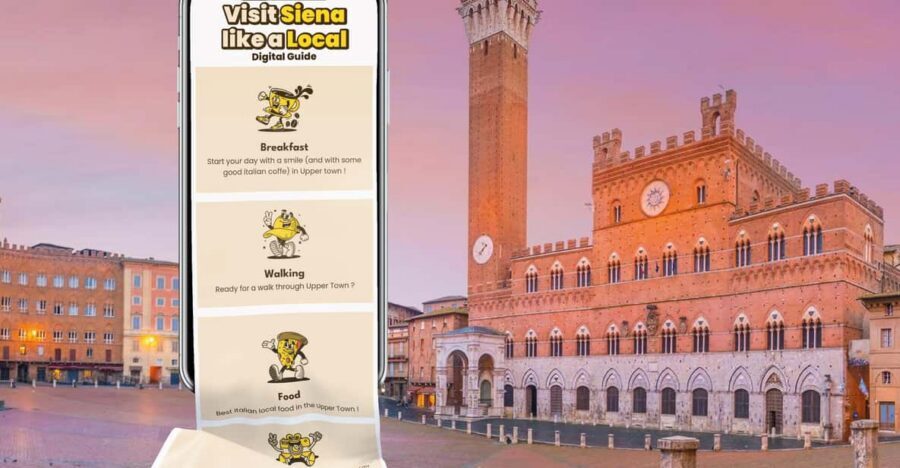
This tour is designed for one big goal: you see Siena the way a local might point it out—through small details, side stories, and practical suggestions—while still keeping you in control. Instead of a live guide’s fixed schedule, you’re following an audio guide that matches where you are, then deciding how long you want to stay on each stop.
I like this setup because Siena rewards patience. A square can be a photo stop for five minutes, or it can be your “okay, I’ll just stand here and watch life” moment. This guide nudges you toward both kinds of moments, with enough background to make what you’re seeing click.
You’ll also get the tour in English, Spanish, or Italian (audio), which matters if you want the story in a language you can actually absorb while walking. No awkward translation apps. No squinting at a pamphlet. Just audio and movement.
One more small but real advantage: the experience is meant to be used over a day, with extra time built in (valid for the booked day plus two extra days). That means if you hit a long queue or your appetite wins over your schedule, you’re not trapped.
Other guided tours in Siena



How the digital route actually keeps you on track
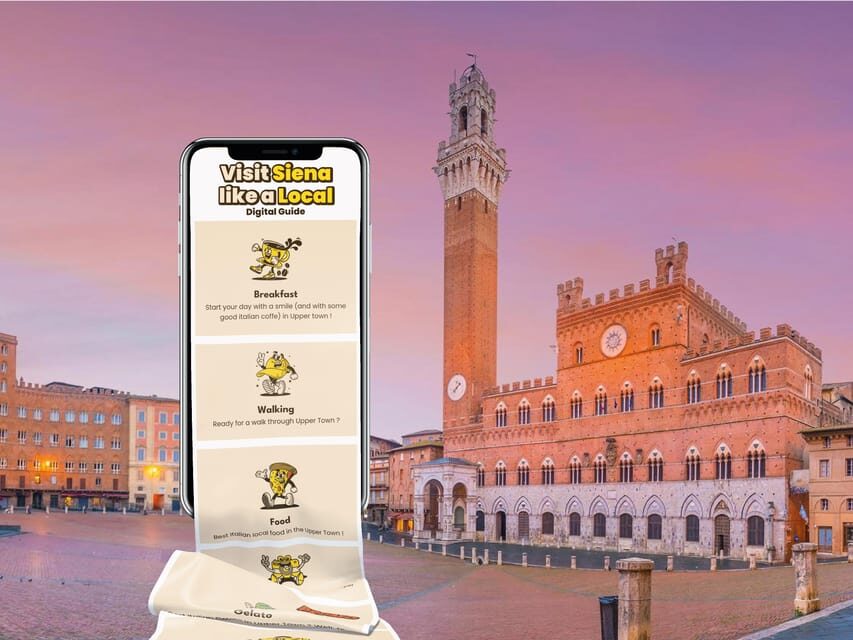
You’re not “just listening.” The itinerary is connected with Google Maps, so you walk from point to point with directions that match the guide’s order. That’s the difference between a useful digital guide and one of those apps that turns your trip into a guessing game.
You can activate the guide even before you reach the start area. In your voucher you’ll get the link and password, and the details explain how to begin. The start point is described as the most practical option, but you don’t have to treat it like a sacred meeting spot. If you’re already in Siena, you can start from another point indicated in the guidebook, then follow the route from there.
Practical note: the digital guide is online and there’s no offline mode. It doesn’t claim to use much data, but you still need a working internet connection. Before you set out, I’d do a quick check:
- smartphone charged (you’re using audio and maps)
- internet actually works in Siena’s streets (not just in the hotel lobby)
There’s no mention of group size because it’s self-guided. That’s good news if you hate waiting, and it’s also good news if you’re traveling with someone who likes museums more than views.
The walk: about 4 km of real Siena streets

This is a walking experience of about 4 km. It’s feasible regardless of athletic training, but you should still plan for uneven cobblestones and lots of turning corners. The pacing is yours, since you can move at whatever speed matches the story points.
I recommend you think about timing like this: treat it as a set of themed stops, not a “must finish fast” checklist. If you want a calmer day, you can pause longer at the squares, take your time near monuments, and use the audio to guide you on what to notice.
The tour also allows free time with monument entry. Entrance fees are not included, and the guide helps you decide where to spend time. That matters because Siena’s big sites often have staggered or sometimes limited entry moments. Here, you’re not stuck inside a rigid plan.
And you can listen via speakers or personal headphones—headphones aren’t included, so plan accordingly. If you use phone speakers, keep the volume sensible. Siena is charming, not an outdoor club.
Piazza del Campo: where the audio helps you see the square’s “why”

One of the most praised highlights is how the guide brings extra meaning to Piazza del Campo. That square is already stunning on first sight. The difference here is that you don’t just look—you get context that makes it harder to forget.
With a digital local guide, the audio tends to do two helpful things at once:
1) it points out what you’re looking at while you’re actually standing there
2) it fills in curiosities and trivia that you’d never get from a quick glance
That combination is why this sort of experience works. Piazza del Campo isn’t only about pretty architecture. It’s about how Siena organized power, community life, and public space—right down to the details that casual sightseeing can miss.
If you want to make the most of it, give yourself time at the square. Let the audio run, then take a few minutes without listening to reset. Siena’s vibe hits harder when you’re not always reading your phone.
Monument stops where you choose to linger (and when to skip)

The guide is built around Siena’s main monuments and the order is pre-planned. But the key feature is that you control how long you stay. You can freely enter monuments during your route (entrance fees not included), and you can spend as much time as you like.
This “your pace” structure is a big deal, especially in Italy where museum timing, ticket lines, and crowds can slow you down. Instead of forcing you into a sprint, the guide is meant for flexibility. If one site makes you want to slow to a crawl, you can do that. If another moment feels skippable, you can move on without feeling like you failed a tour.
A small caution: because it’s self-guided, you should stay aware of your phone battery and the internet connection. If your connection drops mid-monument, you may have to wait or step out to regain signal so the audio and instructions can keep working.
Also, the tour includes tips and hints for monuments, history, curiosities, and even personal anecdotes. That means the audio isn’t just telling you what something is; it’s trying to explain why people care and how locals think about the space.



Local food advice you can use the same day

Siena is a food city, and this guide doesn’t treat eating like an afterthought. It includes delicious dishes and points you toward where to eat, framed through local habits and the kind of advice you’d actually want when you’re hungry and deciding fast.
What I like about including food inside the walking plan is timing. When the route nudges you toward a place to eat, you’re not chasing dinner hours. You’re also not guessing which dishes are “the real deal” versus tourist bait.
Even if you’re not a foodie, you’ll likely enjoy how the guide connects typical dishes to the places you’re seeing. It helps the day feel like one coherent experience instead of separated activities: monuments here, meals there, photo spots everywhere.
If you want to eat well without overplanning, this is the strength. It gives you direction, plus enough context to order confidently.
Curiosities and funny bits that make Siena feel human

The guide aims to bring Siena alive through curiosities and funny anecdotes told from the angle of people who know the city well. That’s the part that can turn a “checklist day” into a day you remember.
Siena has a way of hiding odd details in plain sight—inscriptions, architectural quirks, and stories wrapped around stone. A standard audio guide might just label. A local-style guide tends to explain the weirdness and the why behind it, so you feel like you’re in on the joke.
One detail I took from the experience feedback: there’s also responsive support from the provider side. In at least one case, a guide contact named Matteo replied quickly on WhatsApp with extra tips. That’s not a live guide walking beside you, but it’s useful when you want clarification or an adjustment.
If you like travel that feels personal—like someone’s letting you in on what matters in their hometown—this part of the guide is where the value shows up.
Price and value: is $6 really enough?

At $6 per person, this guide is priced like an impulse purchase. And for what it includes, it often makes sense because you’re buying several things at once:
- a self-guided walking itinerary
- audio in multiple languages
- maps routing through Google Maps
- monument tips, trivia, legends, and local anecdotes
- restaurant direction tied to the day’s pacing
The biggest “value” factor is not just cost. It’s flexibility. You can decide what to skip and what to linger on without losing money or time to a fixed group schedule. If you usually hate being rushed, this will feel like a bargain.
The main tradeoff is obvious: you’re not paying for a live person. So if you want constant Q&A and face-to-face conversation, you’ll prefer a traditional guided tour.
But if you’re comfortable traveling independently and want high-quality context, $6 for a well-structured day in Siena is hard to beat.
Who this tour fits best (and who should look elsewhere)
I’d especially recommend it if you:
- prefer self-guided flexibility over set schedules
- like learning through stories, trivia, and local-style commentary
- want a day plan that still allows real stops for photos and views
- plan to walk Siena anyway and don’t want to carry a stack of guidebooks
It may be less ideal if you:
- hate phone-based navigation and don’t want to rely on internet
- need a live guide for accessibility questions, site-by-site logistics, or detailed explanations on demand
- expect included monument entry fees (they’re not included)
Good news: it’s wheelchair accessible, which is stated as part of the activity. Still, since it’s a walking route, your best bet is to consider the street terrain and how comfortable you are with that kind of movement in Siena’s center.
A smart way to use the guide in the real world
To get the most out of this kind of self-guided audio tour, I’d use a simple routine:
1) start the audio and walk with it for the first two stops so you build the rhythm
2) when you reach a square or major monument, pause the walk pace and let the story finish
3) after the audio ends, take 2 minutes without listening—just look and absorb
4) when you find the food part of the route, plan your order around typical dishes the guide suggests
Also: because the guide can be used over the booked day plus two extra days, you can treat it like a flexible “Siena passport.” If the city throws you a curveball—weather, crowds, or you just fall in love with one street—you don’t have to restart your whole plan.
And if you’re traveling with someone, you can split slightly. One person listens, the other walks ahead, then you regroup at the next Google Maps stop. It’s not rigid like a group tour.
Should you book Siena: Digital Guide made with a Local for your Tour?
I’d book it if you want a local voice and a practical route without the pressure of keeping up with a live guide. The price is low, the walking distance is realistic at about 4 km, and the guide’s strengths are exactly what many people wish traditional tours delivered: personal anecdotes, weird curiosities, food direction, and the ability to linger where the day feels right.
Skip it if you need a fully offline experience or you don’t want to manage phone audio plus internet. And don’t expect monument tickets included. Think of this as a smart way to navigate Siena and understand what you’re seeing, not a paid ticket bundle.
If you’re the type who likes to wander, then check in with a great story when you want it, this is a strong match.
FAQ
Do I need headphones for this digital guide?
No. Headphones are not included, and you can listen using your phone’s speakers or your personal headphones.
How much walking is involved?
You’ll walk about 4 km through Siena streets. It’s described as feasible for people regardless of athletic training, but it is still real walking.
Do I need internet access?
Yes. The digital guide is online and there is no offline mode, so you’ll need an internet connection while using it.
What languages are available for the audio guide?
The audio guide is available in English, Spanish, and Italian.
Can I start the tour at any time?
Yes. It’s valid for one day and you can start at the available starting times shown when you check availability.
Are monument entrance fees included?
No. You can freely enter monuments during the experience, but entrance fees are not included.
Do I have to meet a guide in person?
No. You don’t meet a person. You use your phone to activate and follow the guide digitally.
Is it wheelchair accessible?
Yes, wheelchair accessibility is listed for this activity.
Can I start from somewhere other than the train station?
You don’t have to start from the train station. You can activate the guide from the most practical start point or from another point shown in the guide details, depending on where you are in Siena.