REVIEW · SIENA
Siena Walking Tour with Audio and Written Guide by a local
Book on Viator →Operated by Walking Cap · Bookable on Viator
Winding medieval streets with guidance that fits your pace.
This Siena walking experience pairs an audio + written guide by a local with a stop-by-stop route through the city’s most famous corners, then lets you pause and move at your speed. I like that you’re not stuck in a rigid schedule, and you still get clear context for what you’re looking at.
Two things I really like: first, the guide includes practical restaurant advice with authentic food (useful when you’re hungry right after the walk). Second, the audio and text are available in multiple languages, so you can follow along even if your group isn’t all English.
The main drawback is physical. The route includes steep climbs/descents and uneven terrain, so if your legs aren’t great with old-city sidewalks and steps, plan carefully and bring sturdy shoes.
In This Review
- Key highlights worth planning around
- What you’re really buying for $7.20 in Siena
- Timing and where the walk starts and ends
- How the audio and written guide works in real life
- The route stop-by-stop: what you’ll see and what to watch for
- Stop 1: Porta Camollia (old gate, big legend energy)
- Stop 2: Fortezza Medicea / Forte di Santa Barbara (walls with real views)
- Stop 3: Basilica Cateriniana di S. Domenico (brick simplicity that hits)
- Stop 4: Via Fontebranda (Siena’s famous water source)
- Stop 5: Duomo di Siena (ticketed, worth the effort)
- Stop 6: Battistero di San Giovanni (unfinished outside, richer inside)
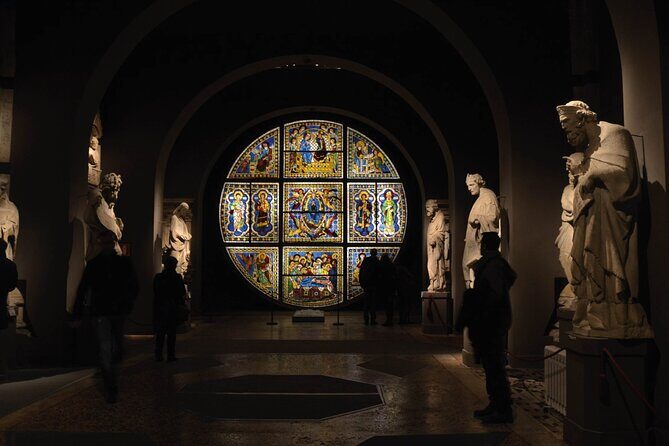
- Stop 7: Museo dell’Opera Metropolitana (1869 museum life inside the cathedral area)
- Stop 8: Facciatone (the view from the top)
- Stop 9: Piazza del Campo (Siena’s signature shape)
- Stop 10: Piazza Salimbeni (finish with Sienese Gothic charm)
- The one thing to plan for: stairs, slants, and old-stone feet
- Why this order of stops works (and when it might not)
- Who this walk is best for
- Value check: paying $7.20 plus optional cathedral tickets
- Should you book this Siena walking guide?
Key highlights worth planning around
- Self-paced audio route that you control, so breaks are easy
- Local food recommendations for where to eat after you finish
- Big sights in a smart order, from Porta Camollia to Piazza del Campo
- Cathedral complex tickets are separate, so you choose how deep to go
- Multiple languages in the audio and text guide
What you’re really buying for $7.20 in Siena
At $7.20 per person, the value here is mostly about the guide itself. You’re paying for a well-structured path, an audio track, and written context that helps you notice what matters in Siena—especially when you’re walking through cramped medieval streets that can look similar if you don’t have a narrative.
This is not a “skip-the-line, sit-and-listen” tour. It’s a guided-by-your-phone experience, so you’re free to slow down, speed up, or stop to look longer at the details that catch your eye. That matters in Siena because the city rewards wandering—just not always in a straight line.
You’ll also appreciate the practical angle: the included restaurant suggestions and monument tips are meant to make your day run smoother, not just to give you facts you forget in ten minutes.
Other Siena city walking tours we've reviewed in Siena
Timing and where the walk starts and ends
The walk is about 4 to 5 hours long, give or take. That’s a sweet spot for Siena: long enough to hit the classics, short enough that you’re still fresh for dinner in the evening.
You start at Siena FS53100 Siena, Province of Siena, Italy (near Siena station) and finish in Piazza Salimbeni. That end point is convenient because you’re dropping out of the route right into another atmospheric square, with Sienese Gothic architecture right there to frame your photos.
Even though there’s a route with set stops, you’re not required to march at a group pace. If you want to linger at the Duomo area, you can. If you’d rather speed through smaller stops, you can do that too.
How the audio and written guide works in real life
You’ll need a smartphone with an internet connection to use the digital guide. The guide includes both audio and text, and the languages listed include English along with other options (Eng, Esp, Ita, Ger, Fr).
Once you’re on the route, you can hear the audio through your phone’s speaker, or—if you have them—through headphones. This is a big deal if you want the information without constantly stopping to read signs or plaques.
The tone of the included material is designed to be quick and usable while walking. That’s a strength on a city day, but it also explains why some people looking for deep architectural explanations feel it’s light. This guide is meant to help you understand the main points as you go, not replace a full-on guidebook.
The route stop-by-stop: what you’ll see and what to watch for
Stop 1: Porta Camollia (old gate, big legend energy)
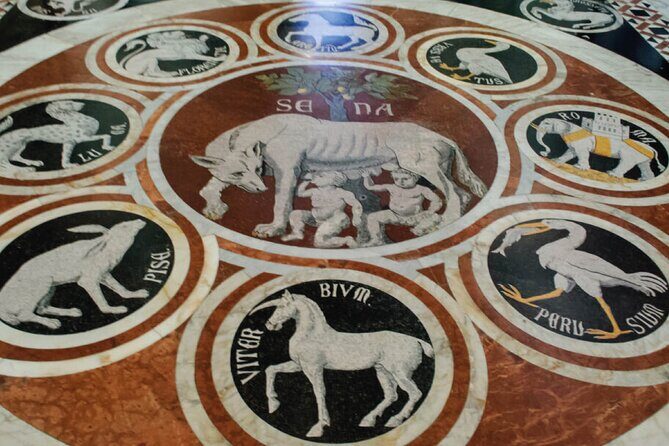
Porta Camollia is one of Siena’s older city gates, tied to a founding legend. This is a good first stop because it sets context fast: you’re not just walking from postcard to postcard; you’re entering a city that was defended, organized, and remembered.
It’s a short stop (around 10 minutes), so don’t expect a long pause here. Instead, use it as a warm-up: notice the gate’s place in the urban layout and let the story give the stone meaning.
Other walking tours we've reviewed in Siena
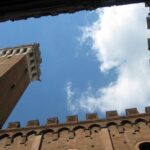
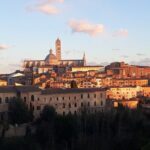
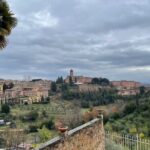
Stop 2: Fortezza Medicea / Forte di Santa Barbara (walls with real views)
Next you reach the Fortezza Medicea, also known as Forte di Santa Barbara. This is where the walk starts to feel like a change of scenery. You can walk on ancient walls and ramparts, with benches and a calmer feel compared to the street-level crush.
The practical advantage: you get views over Siena without needing to plan a separate viewpoint. The stop is about 30 minutes, which is enough time to stroll, look out, and settle your pace.
One thing to keep in mind: walls and ramparts often mean stairs and uneven paths. If your footing is uncertain, slow down and keep your eyes on the ground.
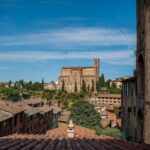
Stop 3: Basilica Cateriniana di S. Domenico (brick simplicity that hits)
This basilica is notable for being built entirely in brick. From the outside, it’s described as simple, without elaborate decoration. That contrast can be surprising if you expect Siena to be constantly ornate on every surface.
The stop is about 15 minutes. Use this time to look at how the brickwork creates texture and how the church’s external restraint helps the city’s Gothic drama make sense later.
Stop 4: Via Fontebranda (Siena’s famous water source)
Via Fontebranda is where you get an “ordinary” medieval detail with big character: it’s home to one of Siena’s oldest and most famous water sources. The guide also frames it as a street with old-world charm, so you’re not just passing through—you’re noticing the rhythm of a historic lane.
This stop is about 15 minutes. It’s ideal if you want a quick breather. Water stops also help break up the walking energy before the more intense cathedral complex area.
Stop 5: Duomo di Siena (ticketed, worth the effort)
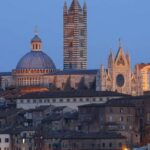
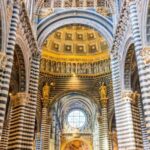
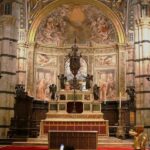
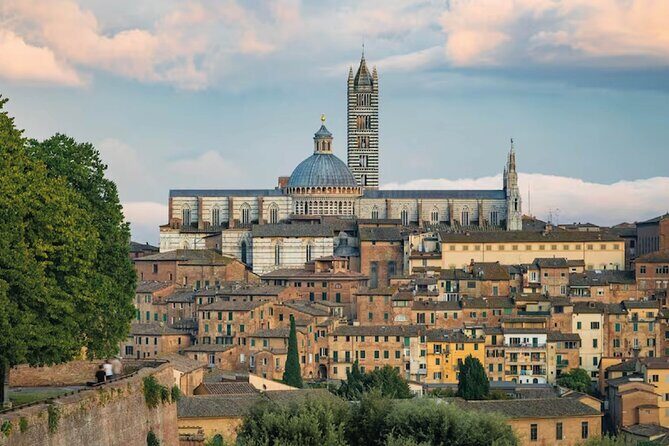
Now you’re in the heavyweight zone: Siena Cathedral (Santa Maria Assunta). You’ll recognize it as a masterpiece of Italian Gothic architecture, and the cathedral is one of Siena’s main attractions.
Plan for around 30 minutes here, but remember the ticket is not included. The Duomo ticket cost is listed as from €10.50.
If you only do one paid monument, this is the one most people will find worthwhile. The guide’s job here is to help you look correctly—so you get more than “wow, it’s big.” You get “here’s what to notice.”
Stop 6: Battistero di San Giovanni (unfinished outside, richer inside)
Near the cathedral apse, you reach the Battistero di San Giovanni. It was built between 1316 and 1325, with an unfinished facade. Then the interior history does the work: it was enriched in the 15th century, with paintings and sculptures.
This stop is about 15 minutes. The ticket for this part is not included, and the listed options start at from €18, with combinations that can include the Opera museum, Cathedral, and the “Facciatone.”
This is a smart stop for people who like contrast: the exterior looks incomplete, but the interior carries the message. If you’re the type who likes architecture details, you’ll probably want to allocate more than the minimum time once you’re inside.
Stop 7: Museo dell’Opera Metropolitana (1869 museum life inside the cathedral area)
The Museo dell’Opera Metropolitana is a museum founded in 1869. The guide highlights that it winds through the right aisle of the Duomo Nuovo, and it’s described as a place to see some incredible masterpieces.
This is the longest interior commitment on the route: about 1 hour 30 minutes. Tickets here are not included, again starting at from €18 as part of a bundled option that can include the Baptistery, Cathedral, and Facciatone.
If you hate museum time, you might shorten this. If you love art inside sacred spaces, this is where the day turns from “scenery” into something more meaningful.
Stop 8: Facciatone (the view from the top)
Facciatone is connected to the museum area and sits at the top floor. The payoff is the view of the city.
The listed time is about 30 minutes, and tickets are not included, starting again from from €18 when bundled with other cathedral-area components.
This stop is for you if you want the cathedral complex to end with a payoff outside the walls. It also works as a photo-friendly break in a day that’s mostly walking and looking down old streets.
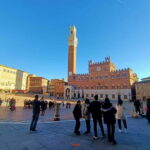
Stop 9: Piazza del Campo (Siena’s signature shape)
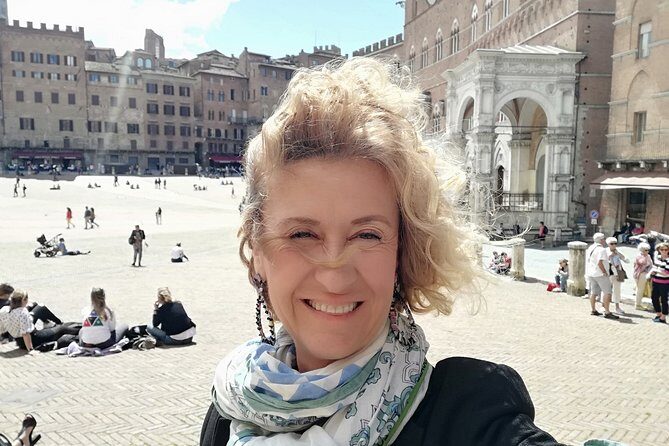
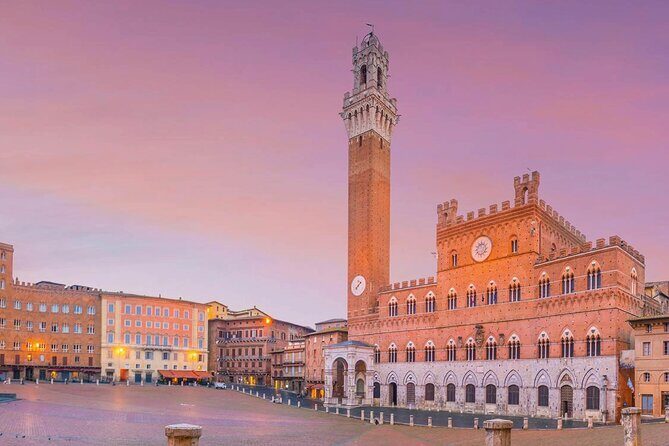
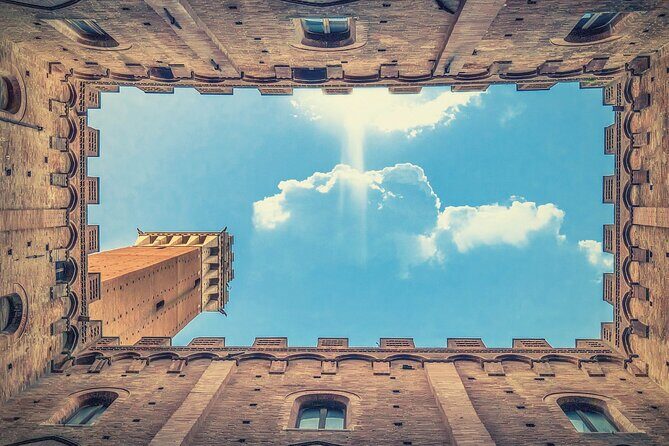
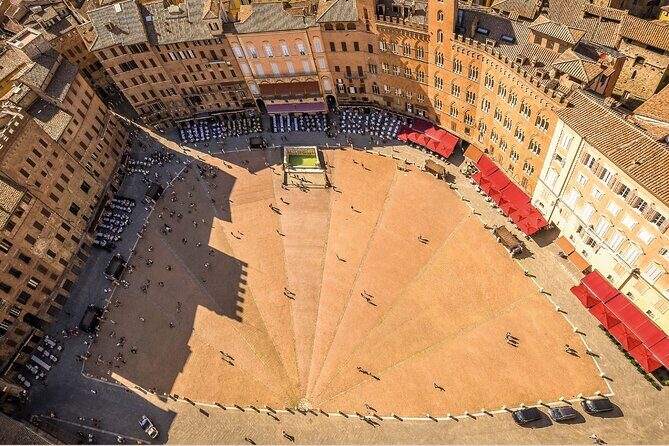
Piazza del Campo is one of Siena’s most recognizable places and is tied to UNESCO’s view of Siena as an ideal example of a medieval city. This is where the walk becomes iconic: you look up, you recognize patterns, and suddenly Siena feels like it’s all connected.
Time here is about 20 minutes. Use this time to take a step back and understand how the city’s layout supports its dramatic civic spaces.
This is also a great place to reset your energy before the final square.
Stop 10: Piazza Salimbeni (finish with Sienese Gothic charm)
You finish in Piazza Salimbeni, which competes with Piazza del Campo in terms of importance and character. The guide points out Palazzo Salimbeni as the standout, with Sienese Gothic architecture that’s meant to catch your eye.
This stop is about 10 minutes—short, but enough to land your walk with style. After that, you’re right where it makes sense to choose a nearby meal.
The one thing to plan for: stairs, slants, and old-stone feet
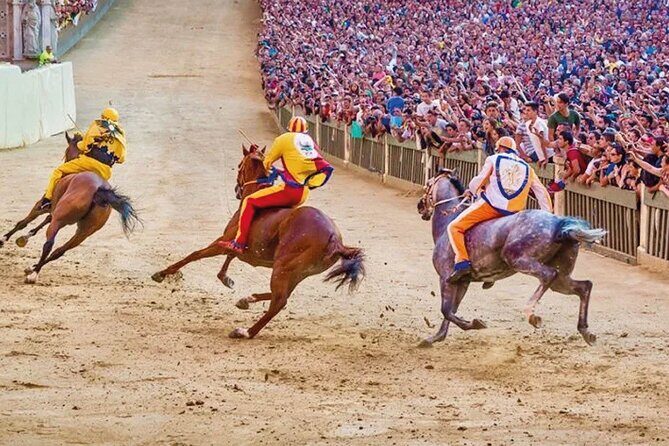
Siena is historic, which means it’s not designed for smooth modern walking. Even if the route is doable for many people, it includes steep climbs/descents and uneven terrain.
My practical advice is simple:
- Bring sturdy shoes (the uneven ground is real).
- Pace yourself on climbs; don’t start the day sprinting.
- If you know you struggle with steps, think about how you’ll handle the cathedral complex area, where the terrain can feel more demanding.
The guide format helps because you can pause when you need to. But it won’t erase the physical reality of walking Siena.
Why this order of stops works (and when it might not)

The sequence is smart: you start at a city gate, move to viewpoints on the fortress walls, then head to churches and a classic water stop before stepping into the cathedral cluster. Finally, you return to open-air civic spaces with Piazza del Campo and Piazza Salimbeni.
That order helps you build a mental map:
- defenses and origins early,
- religion and craftsmanship in the middle,
- civic Siena at the end.
One potential mismatch: if you hate paying for interior tickets, the Duomo complex can feel like extra cost. Those cathedral-area tickets start at €10.50 for the Duomo and €18 for the combined cathedral/baptistery/opera/facciatone options, and those amounts are not included in the base price.
If you only want exterior views, you can still enjoy a lot of the walk, but you’ll need to decide where you want to spend money.
Who this walk is best for
This is a great fit for you if:
- you want freedom to go at your own pace,
- you like guided stops but don’t want a live group schedule,
- you want a practical day plan that ends in squares where dinner is easy to find,
- you travel with kids and want something simple to follow (the audio format is built for stopping and restarting).
It may be less ideal if:
- you want deep, stop-by-stop storytelling and long explanations,
- you dislike walking on uneven ground,
- you’re expecting everything major to be included with no paid entries.
Value check: paying $7.20 plus optional cathedral tickets
Let’s do the math in plain terms.
You pay $7.20 for the guide experience: audio, text, and local restaurant recommendations, plus tips for monuments and history. Then if you decide to visit the cathedral interior parts, you budget separately: Duomo from €10.50, and the combined options around from €18 for Baptistery/Opera/Facciatone.
So you’re buying flexibility. If you’re budget-conscious, you can skip the paid interiors and still enjoy a big portion of the city’s most recognizable spaces. If you’re willing to invest in the cathedral complex, the day becomes much richer.
For me, this is the key value point: the low entry price keeps the guide accessible, and you choose how much paid “museum time” you want to add.
Should you book this Siena walking guide?
Yes, if you want a straightforward way to see the core Siena highlights with local audio context and the freedom to move slowly, stop for photos, and pace yourself through the day.
I would book it if:
- you like self-guided learning,
- you want restaurant suggestions built in,
- you’re comfortable walking uneven old streets and handling climbs.
I wouldn’t rush to book it if:
- you expect a live, deep lecture-style guide,
- you know you struggle with stairs and uneven terrain and can’t adjust your pace,
- you only want fully included monument access with no extra tickets.
If that sounds like you, go for it. Siena is a city where a good route plus the right kind of guidance makes all the difference.