REVIEW · SIENA
Siena Private Walking Tour
Book on GetYourGuide →Operated by Travmonde OÜ · Bookable on GetYourGuide
Siena has layers you can read on foot. This private Siena walking tour threads together medieval art, UNESCO-era sculptures, and big political turning points.
I love the way the tour focuses on specific historical themes—Etruscan traces, the Senones, and Siena’s Republic—so you’re not just sightseeing. Another plus is the guide stays with your group only, with room for on-the-spot tailoring.
A key consideration: entrance fees aren’t included, so if you want to go inside major sites, you’ll need to budget extra.
In This Review
- Key Things I’d Prioritize on This Tour
- Siena Private Walking Tour: Why This Works as a 90-Minute Story
- Meeting at Fonte Gaia in Piazza del Campo (And Getting Oriented)
- UNESCO Siena Through Medieval Sculptures (What You Should Watch For)
- Etruscan Traces: The Oldest Roots Under the Medieval City
- The Senones’ Influence: Understanding Who Helped Shape Siena
- Siena’s Republic Era: How Civic Power Looked in Stone
- The Italian War’s Impact: Why History Doesn’t Stay in the Past
- Transition to Florence’s Duchy: Making Sense of Siena’s Later Story
- The Walk Back: Why Ending at the Same Spot Helps
- Value and Group Fit: Who This Tour Is Best For
- What’s Included (And What You Should Plan Around)
- Quick Note on Operator and Tour Style
- Should You Book This Siena Private Walking Tour?
- FAQ
- Where does the tour start?
- How long is the Siena private walking tour?
- Is this a private tour?
- What languages are available?
- Is the price per person?
- Are entrance fees included?
- Is free cancellation available?
Key Things I’d Prioritize on This Tour
- Start at Fonte Gaia in Piazza del Campo to get oriented fast.
- Medieval sculptures first, including works dating back to the 13th century.
- Etruscan and Senones threads that explain how Siena grew before the medieval glow.
- Republic-era power shifts, then the Italian War and what it changed.
- Florence’s Duchy takeover context, so the story of Siena feels complete.
Siena Private Walking Tour: Why This Works as a 90-Minute Story
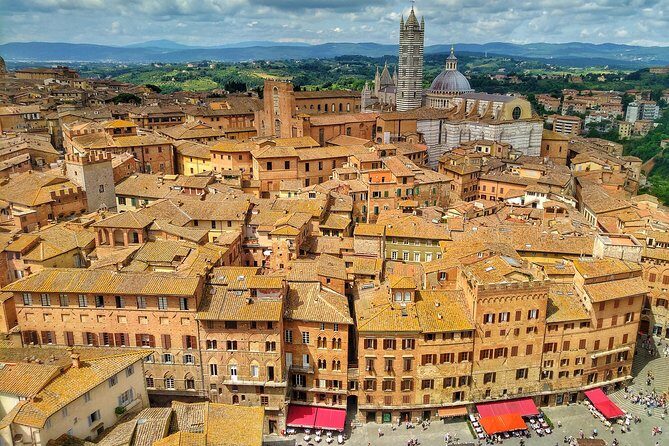
Siena is one of those places where a walk feels like reading a living history book. The streets are medieval, the art is medieval, and the politics are medieval too—just in a way that you can actually understand while you’re standing there. This Siena Private Walking Tour is built around that idea: you get a guided stroll that explains what you’re seeing, not just what it is.
The tour is 1.5 hours and runs as a private group experience, with a local professional guide who stays with your party only. That matters in Siena, because the city rewards attention to small visual cues—shapes on stone, sculpted details, and the way monuments relate to each other in the urban layout.
Price is $283.21 per group up to 15. In real terms, that can be good value if you’re traveling with a full group, because it’s not priced per person. Even if you’re a smaller group, the private format is still a strong option if you want a clear narrative and personal pacing rather than joining a larger crowd.
Other walking tours we've reviewed in Siena
Meeting at Fonte Gaia in Piazza del Campo (And Getting Oriented)
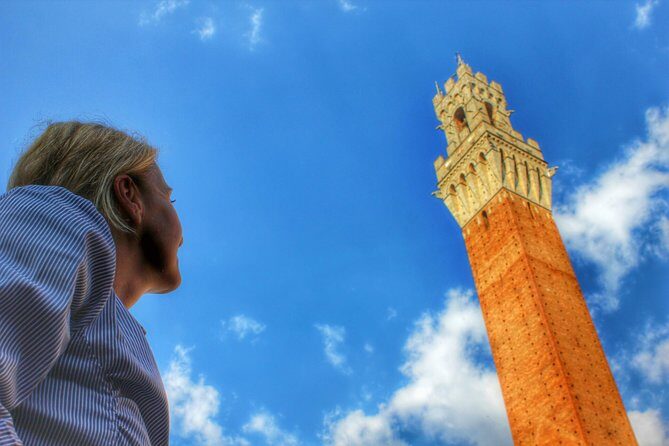
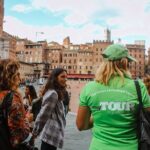
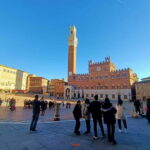
Your tour begins at the Gaia Fountain, Piazza del Campo. This is a smart starting point because Piazza del Campo is Siena’s gravitational center. Even if you’re not trying to memorize the city map, you’ll start to feel how the layout shapes movement and viewpoints.
From the fountain and the surrounding square, you’ll likely get a quick framing of Siena’s layout and why it matters—how the public space connects to the city’s “earthly” structures and its more spiritual identity. The tour description emphasizes spiritual and earthly monuments that kept medieval forms and notable art, and that’s exactly the kind of setup you want at the start: it gives your guide a foundation to build the historical timeline.
One of the practical benefits here is timing. You’re meeting in the heart of Siena, so you don’t waste your short tour period figuring out where to start. And since the tour ends back at the meeting point, you’re not left hunting for your starting reference afterward.
UNESCO Siena Through Medieval Sculptures (What You Should Watch For)
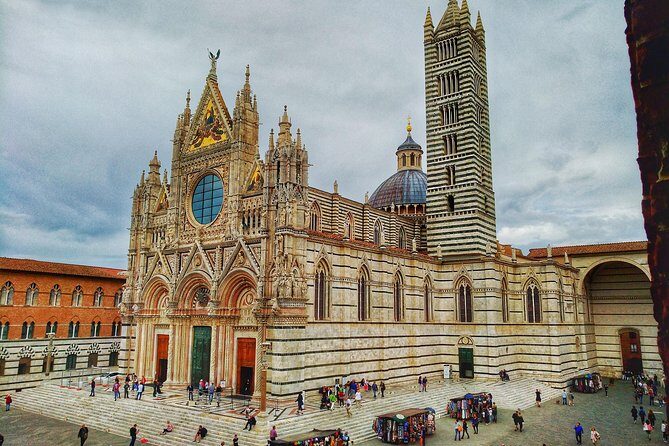
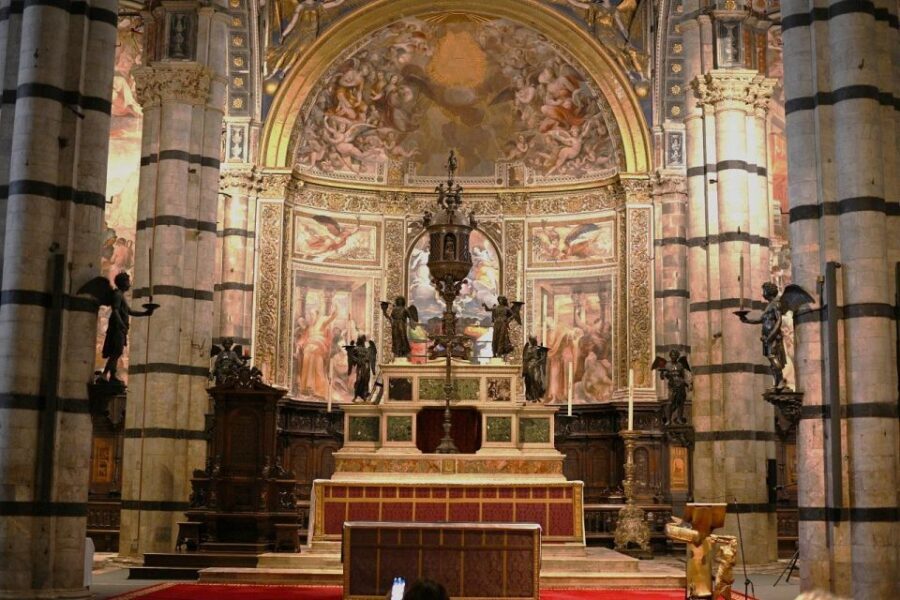
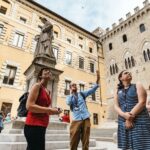
The big visual draw in Siena is its medieval sculpture heritage, with works dating as far back as the 13th century. The tour’s approach—walking through the city while interpreting the monuments—helps you notice things that can be easy to miss when you’re just passing by.
As you go, pay attention to how the sculptural details sit within the broader architecture. In Siena, sculpture isn’t only decorative. It often acts like a storyteller: it reinforces religious meaning, civic identity, and the way power was displayed in stone. The tour description also points to monuments that retained both their medieval forms and their remarkable art—so you’re not just seeing period style, you’re seeing continuity.
If you like art history but also like it to stay grounded, this is a good format. Instead of a museum lecture, you get short guided observations in place—enough to sharpen your eye without turning the walk into a classroom.
Etruscan Traces: The Oldest Roots Under the Medieval City
One of the highlights is exploring Etruscan traces in Siena. This is important because it prevents the “medieval-only” view that many first-time visitors fall into. Siena didn’t start as the medieval city you’re seeing now. The older layers help explain why the city developed where it did and why its later rulers could build on a living, established place.
On a walking tour, “Etruscan traces” usually means you’re looking for clues—signs of early presence, influences, and the way later Siena made use of older foundations or routes. Even when you’re not standing on an obvious ancient ruin, your guide can show you how the medieval city reads like a palimpsest: later eras reused, reshaped, and rebranded the same physical landscape.
What I like about this part of the tour is that it gives you perspective. When you connect today’s architecture to older roots, Siena stops feeling like a theme park. It starts feeling like an actual city with a long memory.
The Senones’ Influence: Understanding Who Helped Shape Siena
Next up is learning about the Senones’ influence. The Senones are part of the broader pre-Roman and early Italian context, and bringing them into the story helps you see Siena as shaped by real groups and political forces rather than as a single, straight line of “then medieval, then modern.”
In practice, this is likely handled through explanation of cultural and political momentum: who had influence, what that influence meant, and how later medieval Siena inherited a landscape already shaped by earlier peoples. Even if you’re not a specialist, the value is clarity. It gives your guide a way to explain why certain civic and cultural traits make sense historically.
For you, this segment is a chance to connect the abstract to the visible. You’re walking through a city where medieval power is monumental, but understanding early influence adds realism. It turns the city into a timeline you can actually follow.
Other private tours in Siena
Siena’s Republic Era: How Civic Power Looked in Stone
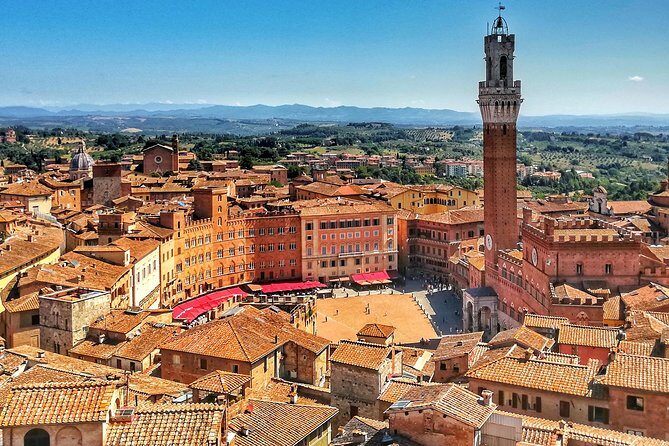
The tour then moves into uncovering Siena’s Republic era. This is one of the most compelling periods to understand in Tuscany because city-states were not passive backdrops—they were active competitors, builders, and players in regional politics.
In a walking tour format, “Republic era” isn’t just a date range. It’s about how civic identity shows up in the city’s look and tone. You’ll likely focus on how public life and authority were expressed through architecture and sculpture, and how that expression fed pride and social cohesion.
This is also where the guide’s narrative pacing matters. With only 1.5 hours total, you want a guide who can pick the most important threads and weave them into something you can carry. Republic-era context helps you understand why Siena felt the way it did and why it mattered to others.
The Italian War’s Impact: Why History Doesn’t Stay in the Past
Another highlight is witnessing the Italian War’s impact. Wars in this region weren’t brief disruptions; they changed alliances, leadership, and the direction of city development. Knowing that a turning point happened helps you read Siena more intelligently, especially if you’ve seen enough cities to recognize that political shifts often leave visible traces.
On the ground, this kind of segment usually works best when the guide ties the “war story” back to what you can see in the city—how styles, power structures, or civic priorities changed after conflict.
I like including war context on a short tour because it explains why eras end the way they do. Without it, Siena can feel like a perfect medieval postcard that never had problems. With it, you get the sense of cause and effect: events in the wider Italian world shaped local choices in Siena.
Transition to Florence’s Duchy: Making Sense of Siena’s Later Story
Finally, the tour covers the transition to Florence’s Duchy. This is a crucial end chapter because it explains how Siena’s independence and identity shifted. If you only focus on medieval art and architecture, Florence becomes just the nearby star you visit next. But if you understand the political transition, your next stop in Tuscany will feel like part of a connected story rather than a random travel checklist.
This segment is especially valuable if you’re visiting multiple Tuscan towns. You’ll start noticing that Renaissance-era Florence often grows in the shadow of earlier city-states. Siena’s shift toward Florence is one of those storylines that makes the region feel like one big historical conversation.
The Walk Back: Why Ending at the Same Spot Helps
The tour ends back at the meeting point—again at Piazza del Campo and Fonte Gaia. That sounds simple, but it’s a practical gift for a city like Siena. When time is short, having a clear return location means you can comfortably continue on your own afterward—whether that’s grabbing a snack, checking out another landmark, or simply enjoying the square at your own pace.
It also makes it easier to review what you learned. Standing again by the same focal point helps your brain lock in the narrative you just followed.
Value and Group Fit: Who This Tour Is Best For
This is a private group tour with your guide dedicated to your party only. With up to 15 people per group, it can work for families, friends, or a small travel group that wants a coordinated pace rather than waiting for others. The languages listed are English and Italian, which is handy if you want options.
Price at $283.21 per group is worth thinking about in terms of party size. If you’re booking alone or as a pair, it may feel like a premium—private tours usually do. But if you’re splitting the cost among several people, the per-person value can become surprisingly reasonable for a guided experience in a UNESCO city center.
This tour also fits well if you care more about understanding than just taking photos. The highlights are history-driven: Etruscans, Senones, Republic-era Siena, the Italian War, then the Florence Duchy transition. If that’s your style, you’ll likely appreciate how the guide keeps the walking connected to a clear timeline.
What’s Included (And What You Should Plan Around)
Included:
- A local professional guide with your group only
- Possible customizing on the spot with your guide
Not included:
- Entrance fees
That last point is the big planning detail. The tour is designed as a guided walk, and entrance fees depend on the sites you choose to enter (the tour notes that fees are not included). If you’re hoping to go inside multiple major attractions, you’ll want to budget separately.
The good news: because you’re walking, you can still get a lot out of the story even if you decide not to enter buildings. For many people, the explanations outside the sites are what make the city click.
Quick Note on Operator and Tour Style
The provider is Travmonde OÜ. The tour is positioned as a guided, live experience in English or Italian, and it’s private by group—so it’s more like a tailored conversation than a mass sightseeing product.
Should You Book This Siena Private Walking Tour?
I’d book it if you want a short, guided narrative that connects Siena’s medieval art to the political reality underneath it. The combination of medieval sculptures, Etruscan/Senones roots, and the step-by-step shift from Republic to Florence’s Duchy is exactly the kind of storyline that makes a place feel understandable, not just beautiful.
Skip it (or at least reconsider the timing) if your main priority is ticking off a long list of museum interiors, because entrance fees aren’t included and the total duration is only 1.5 hours. Also, double-check starting times when you book—availability can affect what you can fit into your day.
If you’re the type who likes to walk, look closely, and leave with a clearer picture of how Siena became Siena, this is a solid use of time.
FAQ
Where does the tour start?
It starts at the Gaia Fountain in Piazza del Campo, Siena (53100), Italy.
How long is the Siena private walking tour?
The duration is 1.5 hours.
Is this a private tour?
Yes. It’s listed as a private group, and the guide will be with your group only.
What languages are available?
The tour is available in English and Italian.
Is the price per person?
No. The price is listed as $283.21 per group, up to 15 people.
Are entrance fees included?
No. Entrance fees are not included.
Is free cancellation available?
Yes. You can cancel up to 24 hours in advance for a full refund.