REVIEW · SIENA
Siena: City Tour in German
Book on GetYourGuide →Operated by Janine guide in Siena · Bookable on GetYourGuide
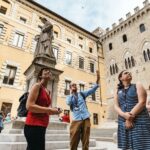
Siena in two hours? Totally doable. This German-guided walk with Janine takes you from San Domenico to Piazza del Campo, and the Palio tradition feels personal, not just historic. I love the quick city-orientation moment from San Domenico, and I love how the route threads through Siena’s medieval streets like Via della Sapienza and the Via Francigena. One consideration: you’re on your feet for the full 2 hours, so plan for steady walking and bring comfortable shoes.
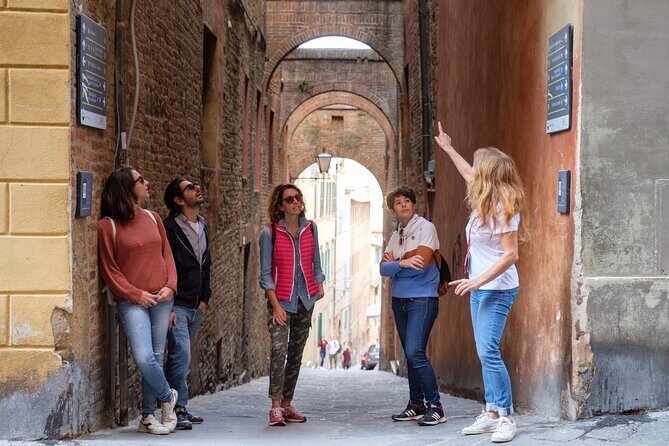
I’d call this a smart “get your bearings fast” tour, but without rushing past the details. You’ll move through key squares and street segments, including places tied to scholarship, banking power, and Siena’s famous neighborhood identities (the Contrade). Janine is a local guide who loves and lives in Siena, and that local touch shows in the way she connects places to the way Sienese people care about them.
If you’re here for the big sights—cathedral area and Piazza del Campo—this tour gives you both the look and the why. If you want a slow, gallery-style pace with lots of inside museum time, you might prefer something longer.
In This Review
- Key things I’d focus on before you go
- Starting at San Domenico: the view that explains Siena’s layout
- Via della Sapienza and the University of Siena (founded 1240)
- Via Banchi di Sopra: the Via Francigena feel in your legs
- Piazza Salimbeni: banking power in a medieval-shaped square
- Piazza Tolomei and the Church of S. Cristoforo
- Croce del Travaglio: the crossroads where you can feel Siena’s rhythm
- Contrade streets and the Palio pride thread
- Climbing to Piazza del Duomo: the highest and most ancient point
- Piazza del Campo finish: where the Palio of Siena happens
- Price and value for a 2-hour German city tour ($74)
- What the tour feels like with Janine as your local guide
- Who should book this Siena City Tour in German?
- Should you book? My practical take
- FAQ
- FAQ
- What is the duration of the Siena city tour in German?
- How much does the Siena city tour cost?
- What language is the guided tour offered in?
- Where do I meet the guide?
- Where does the tour end?
- Is the tour wheelchair accessible?
- Are entrance fees included?
- What should I bring?
- Are there different starting times?
- Can I cancel or reserve flexibly?
Key things I’d focus on before you go
- San Domenico first for the view and St. Catherine’s setting
- Via della Sapienza tied to the University of Siena founded in 1240
- Via Francigena segment through Via Banchi di Sopra, a major medieval road axis
- Piazza Salimbeni stop and the story of Banca Monte dei Paschi
- Contrade walk using Croce del Travaglio as the crossroads marker
- Finish at Piazza del Campo for the Palio of Siena atmosphere
Starting at San Domenico: the view that explains Siena’s layout

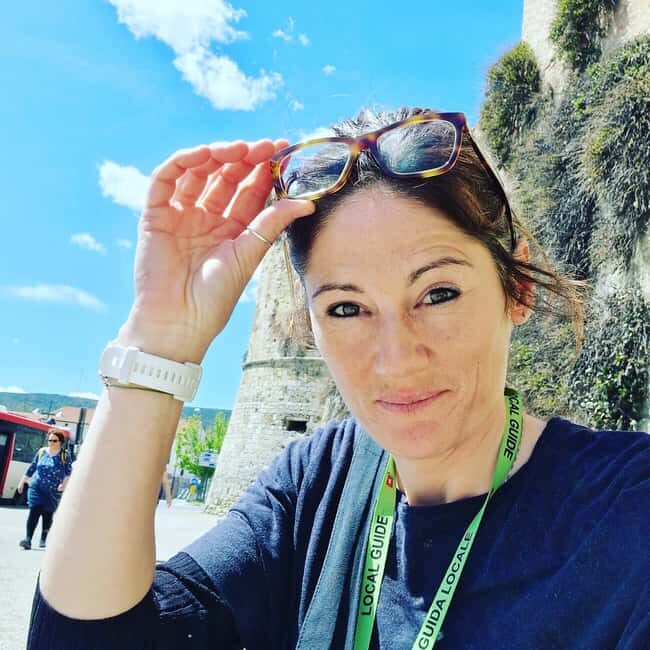
The tour meets at the big tree in front of the San Domenico church. Look for the guide badge with the green lanyard and the words local guide, and you’ll know you’re in the right place.
From here, you start at Basilica of San Domenico, where the relics of St. Catherine (patron saint of Italy and Europe) are kept. It’s a powerful opener because you’re not just ticking a church box—you’re grounding your whole visit in the religious identity that helped shape Siena’s culture.
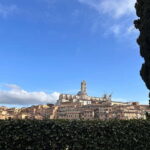
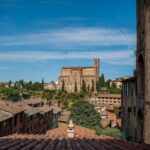
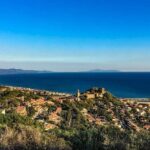
Then comes the practical magic: you get a breathtaking view of the city that helps you understand how Siena was built. Even if you don’t memorize streets on the first try, that “aha” moment makes the rest of the walking feel logical.
Other city tours we've reviewed in Siena
Via della Sapienza and the University of Siena (founded 1240)

Next, you head toward one of Siena’s central streets: Via della Sapienza. This is where the University of Siena was founded in 1240, so you’re walking through a corridor that long ago served learning, not just commerce or foot traffic.
What I like about this stop is that it shifts your mindset. Siena isn’t only about stone and squares; it’s also about ideas, training, and institutions that existed long before mass tourism.
If you’re the type who enjoys connecting a location to a single date or origin story, this part will click fast: 1240 gives you a clear anchor point while you walk.
Via Banchi di Sopra: the Via Francigena feel in your legs
After Via della Sapienza, the route continues toward Via Banchi di Sopra, which lines up with a section of the Via Francigena. In medieval times, this wasn’t a small local lane—it was a very important European road axis, and it fed the city’s movement, visitors, and influence.
This is a great stretch to pay attention to because you can feel the difference between a “tourist viewpoint street” and a “historic route spine.” The Via Francigena connection helps you picture Siena as part of a wider medieval network, not a sealed-off hill town.
You’ll also be learning while you walk, not pausing every 30 seconds. For a 2-hour tour, that balance matters.
Piazza Salimbeni: banking power in a medieval-shaped square
Soon you reach Piazza Salimbeni, home to the headquarters of Banca Monte dei Paschi. The tour frames it as the oldest bank in the world still in existence, which makes this square more than a pretty break.
Here’s the value: it shows how Siena’s modern identity keeps one foot in its older structure. You see how influence can shift from road traffic and patronage to institutions that still operate today.
If you’re curious about how European city power evolved over centuries, this stop gives you a clean example without getting lost in numbers.
Piazza Tolomei and the Church of S. Cristoforo
Then you move to Piazza Tolomei, where you’ll pass by the Church of S. Cristoforo and Palazzo Tolomei. This section of the walk helps fill in the “street life around the landmarks” that you’d miss if you only zoomed to the cathedral and the main square.
I like this portion because it’s practical for understanding the neighborhood scale. Siena’s magic isn’t only big views; it’s also the sense that you’re walking through small, meaningful pockets that connect.
You don’t need to go inside to get something from it, and that matters because the tour is designed to be an experience of orientation plus story, without piling on lots of time-consuming entrances.
Croce del Travaglio: the crossroads where you can feel Siena’s rhythm
At Croce del Travaglio, the tour highlights a key idea: this crossroads connects Siena’s three main streets—via Banchi di Sopra, via Banchi di Sotto, and via di Città.
This is one of those moments that makes the city map feel real. Once you understand the “three streets meet here” concept, it’s easier to keep your bearings later when you wander on your own.
And it’s a nice setup for what comes next: passing through many Contrade. Instead of treating Contrade like trivia, the tour uses the street network to explain why these neighborhoods matter in Siena’s identity.
Contrade streets and the Palio pride thread
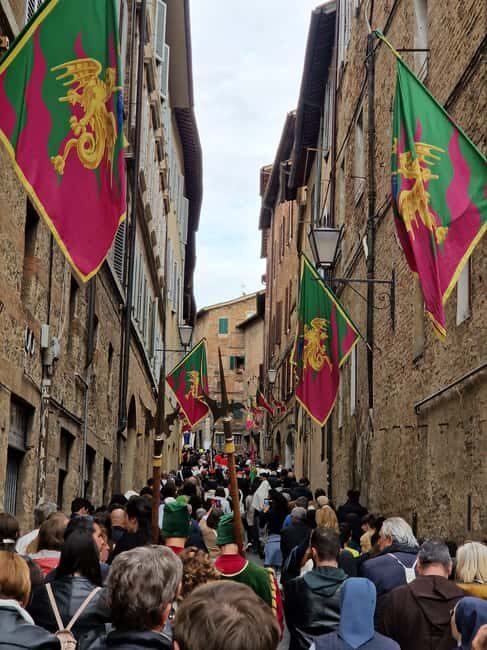
As you walk through many Contrade, you’re building the emotional layer behind the Palio. The tour keeps the focus on why this tradition matters to Sienese people—palio pride as something lived, not just watched.
This is where I think Janine’s local-guide approach really helps. When someone loves Siena and lives there, the explanations tend to sound like they’re about people and habits, not only architecture.
Also, this is a useful way to travel: you’re not only collecting photos. You’re collecting meaning—enough to make the Palio setting at the end feel grounded rather than decorative.
Climbing to Piazza del Duomo: the highest and most ancient point
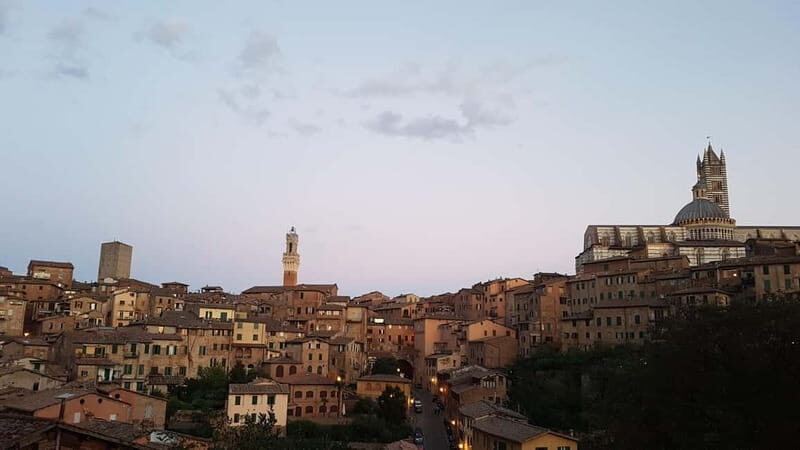
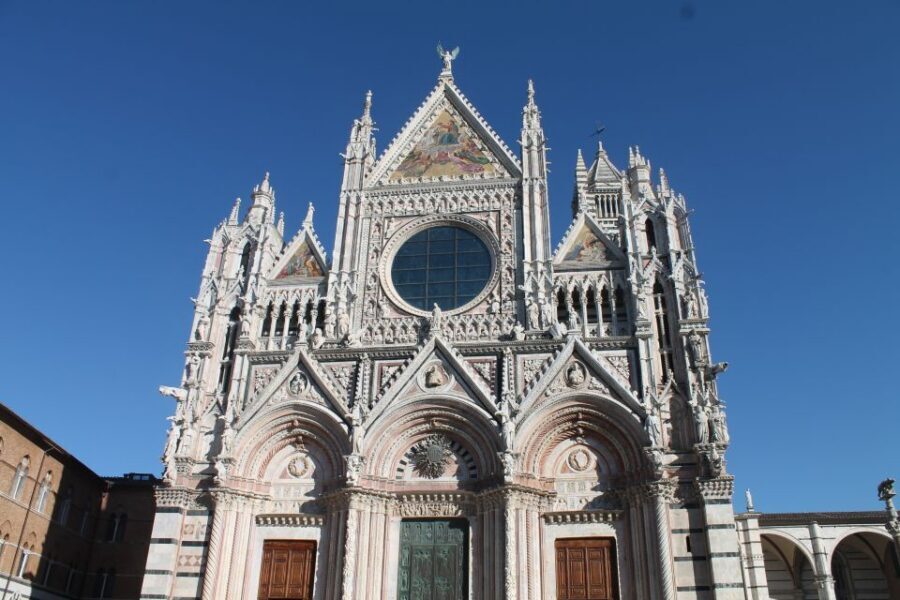
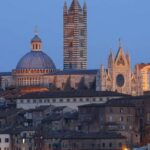
As the walk continues, you reach the highest and most ancient point of the city: Piazza del Duomo. From a tour-design standpoint, this is a smart turning point because it shifts you toward the cathedral area before you finish in the most famous public space.
Even without going inside, the positioning helps. Siena’s center of gravity is not flat—it rises, and it carries a sense of age. That’s something you can notice just by reaching this point and feeling the geometry around you.
If you like “spatial storytelling,” you’ll enjoy how this stop frames the final reveal ahead.
Piazza del Campo finish: where the Palio of Siena happens
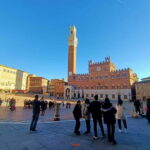
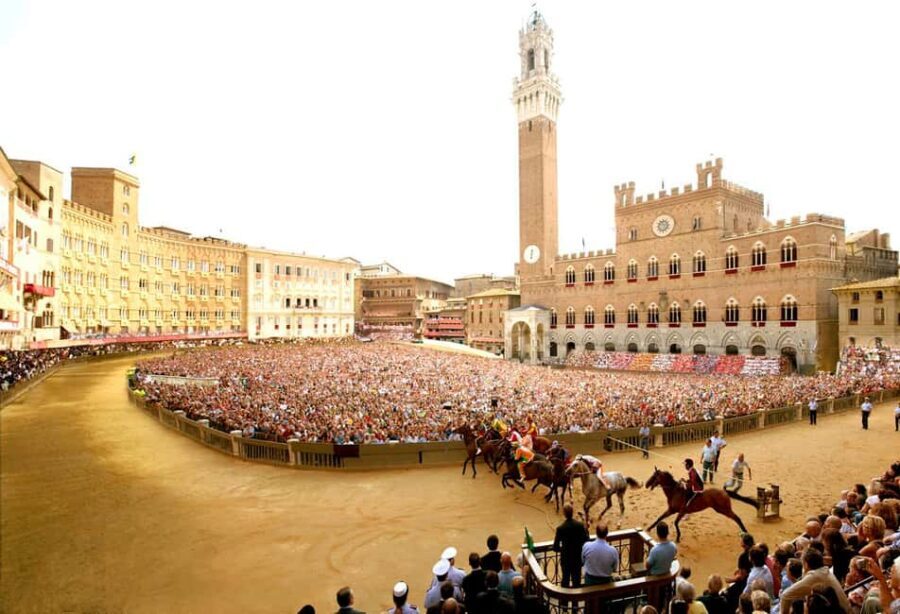
The tour ends back at the meeting point, with the experience culminating in Piazza del Campo—the site of the Palio of Siena. This is the big payoff square, the one most visitors hope to understand beyond postcard views.
Here’s what makes the end worth it: by the time you reach Piazza del Campo, you’ve already walked the story paths. Via Francigena, university roots, bank power, main street crossroads, and Contrade streets all feed into why Siena’s public life centers here.
If you want a tour that leaves you feeling like you actually understand the city’s heartbeat, this is the moment that pulls it together.
Price and value for a 2-hour German city tour ($74)
At $74 per person for 2 hours, the price makes sense if you value a live guide who can tie multiple stops together fast. You also get a key cost-control benefit: the tour is described as without entrance fees, meaning you’re not hit with add-on admissions as the tour goes.
For many visitors, 2 hours is the sweet spot in Siena. You can cover enough landmarks to get oriented, learn the connections behind the big squares, and still have time afterward to roam at your own pace.
The German language matters too. If you’re choosing Siena as a destination where you want clear explanations, a live guide in German can be a big quality upgrade compared with audio-only options.
One small practical note: the route is walking-focused, so your best “value” move is showing up with comfortable shoes and a willingness to keep going.
What the tour feels like with Janine as your local guide
This experience is built around a local-guide approach. Janine is explicitly described as someone who loves and lives in Siena, and the way the tour is framed points to personal, lived-in explanations—especially around the Palio and Contrade identity.
I also like that the tour language is clearly set: it’s a live tour guide in German. That helps you follow the story without gaps, which is especially important when you’re hearing place-based details tied to centuries (like 1240 for the University of Siena).
You’ll likely leave with more than “I saw that.” You’ll leave with a short mental map of how Siena’s streets connect to its pride traditions.
Who should book this Siena City Tour in German?
I’d recommend this tour if:
- you want an efficient 2-hour orientation in Siena
- you care about the Palio of Siena and want the city context behind it
- you like historical street connections like the Via Francigena
- you prefer a German live guide
I’d skip it (or at least pair it with something longer) if:
- you want lots of entrance-based time inside churches or museums
- you dislike walking for a full block of time without frequent breaks
- you need a very slow pace and lots of waiting
Should you book? My practical take
Book it if your goal is to understand Siena quickly and correctly. The combination of San Domenico’s St. Catherine context, the Via della Sapienza and 1240 university anchor, and the finish at Piazza del Campo creates a satisfying storyline in just 2 hours.
Also, the no-entrance-fee setup helps you manage your total budget. You pay for the guide experience, then enjoy the sights without adding surprises.
If you love to wander afterward, this tour is a strong launchpad. You’ll have enough orientation to turn the rest of your time in Siena into your own adventure.
FAQ
FAQ
What is the duration of the Siena city tour in German?
The tour lasts 2 hours.
How much does the Siena city tour cost?
The price is $74 per person.
What language is the guided tour offered in?
The live tour guide speaks German.
Where do I meet the guide?
Meet at the big tree in front of the San Domenico church.
Where does the tour end?
The activity ends back at the meeting point.
Is the tour wheelchair accessible?
Yes, it is described as wheelchair accessible.
Are entrance fees included?
The tour includes a guided city tour without entrance fees.
What should I bring?
Bring comfortable shoes.
Are there different starting times?
There are starting times, but you need to check availability to see the options.
Can I cancel or reserve flexibly?
You can cancel up to 24 hours in advance for a full refund, and you can reserve now & pay later.